Explore SZBL

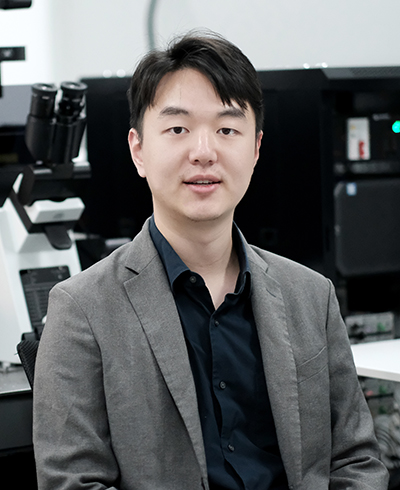
Institute of Molecular Physiology
zengjz@szbl.ac.cn
Molecular Biology,Neuroscience,Immunology
Shenzhen Bay Fellow
Postdoc
Analyst
PhD
Bachelor
Jianzhi Zeng's research group is dedicated to developing neuroimaging techniques to explore the molecular dynamics of critical signals in both pathological and physiological processes.
1. Development of fluorescent protein-based indicators.
2. Investigation of the etiology and intervention of neuroinflammation.
3. Exploration of the circuit and molecular mechanisms of learning and memory.
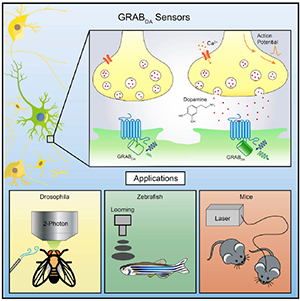
Development of fluorescent dopamine sensor. It enables the detection of dopamine molecular dynamics in olfactory perception, fear behavior, learning and memory, and social behavior in live fruit flies, zebrafish, and mice (Cell, 2018). This work was selected as one of the 'Top Ten Scientific Advances in Chinese Life Sciences in 2018' and was featured in a popular science report by thePeople's Daily.
Focusing on the effective time interval of 'bell and food' in Pavlovian learning, we revealed the molecular and neural circuit mechanisms by which serotonin regulates the time window for learning and memory (Neuron, 2023). This research was featured in a popular science report by thePeople's Daily.
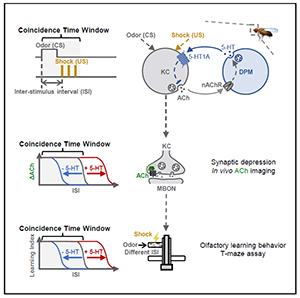
1.Zeng, J.*#, Li, X.*, Zhangren, Z., ... & Li, Y.# (2023). Local 5-HT signal bi-directionally modulates the coincident time window of associative learning.Neuron.(*co-first author; #co-corresponding author)
2.Zeng, J., Sun, F., Wan, J., Feng, J. & Li, Y.# (2019). New optical methods for detecting monoamine neuromodulators.Current Opinion in Biomedical Engineering.
3. Sun, F.*,Zeng, J.*, Jing, M.*, Zhou, J., Feng, J., Owen, S., ... & Li, Y.# (2018). A genetically-encoded fluorescent sensor enables rapid and specific detection of dopamine in flies, fish, and mice.Cell.(*co-first author)
Full publication list:
https://scholar.google.com.hk/citations?user=c4lK_QoAAAAJ&hl=zh-CN
Contact
Address: Gaoke Innovation Center,Guangming District, Shenzhen
Phone: +86-755-86967710
Email: webmaster@szbl.ac.cn
Postal Code: 518132
Copyright © 2025 Shenzhen Bay Laboratory. All Rights Reserved.