Explore SZBL

Institute of Chemical Biology
xtang(at)szbl.ac.cn
Chemical Biology,Microbiology,Pharmacology
Junior Principal Investigator
Research Scientist
Joint Postdoctoral Fellow
Postdoctoral Fellow
PhD
MSc
Bachelor
Genetically encoded organic molecules are the common chemical language that unites all life, from single cells to communities of organisms. As natural products, they are broadly applied in medicine, agriculture and nutrition. Our research interests are mainly to discover natural products from the marine bacteria and the human microbiota, decipher their biosynthetic enzymes, and interrogate their biological roles. We are using a combination of genetics, genomics, chemistry, biochemistry, and bioinformatics to answer basic biological questions and to develop new therapeutics.
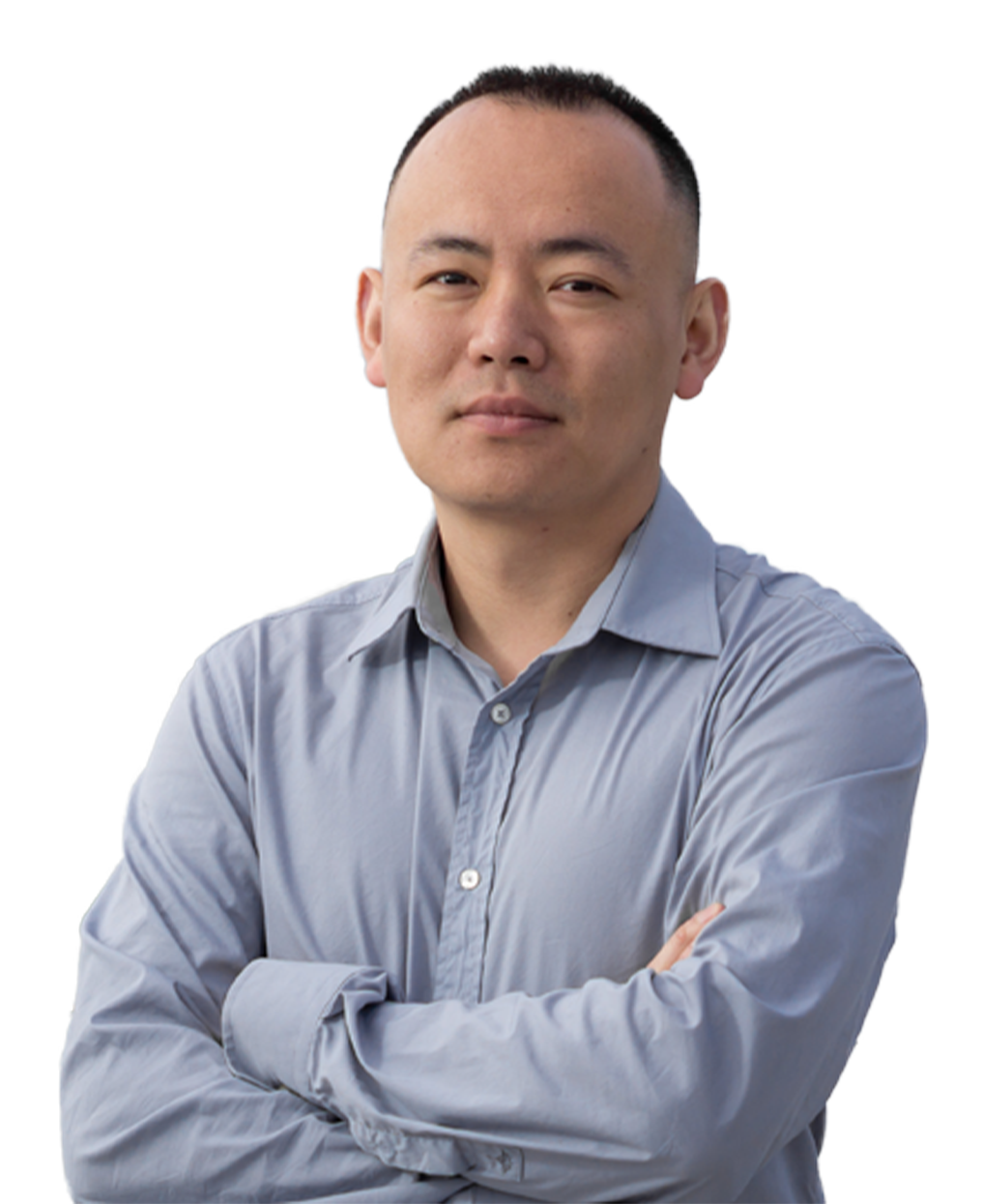
Xiaoyu Tang is an Assistant Professor in the Institute of Chemical Biology at Shenzhen Bay Laboratory. Dr. Tang received his Ph.D. in Pharmaceutical Science from the Eberhard Karls University of Tübingen (Germany). Dr. Tang did his post-doctoral training with Prof. Bradley S. Moore at the Scripps Institution of Oceanography at UCSD and JCVI. Before joining SZBL, he was a Scientist at the leading synthetic biology company Ginkgo Bioworks in Boston. He is a recipient of the 2014 PHOENIX Pharmaceutics Science Award. Over the years, he has developed numerous genome mining techniques that are now standard in the biosynthetic community. His laboratory@SZBL employs a multidisciplinary approach to identify and characterize small molecules from microbes, with an emphasis on the marine and human associated bacteria. As of May 2021, Dr. Tang has published a total of 24 manuscripts, which, according to Google Scholar, have been cited about 570 times. He has been a young editorial board member for the journalChinese Journal of Natural Medicines.
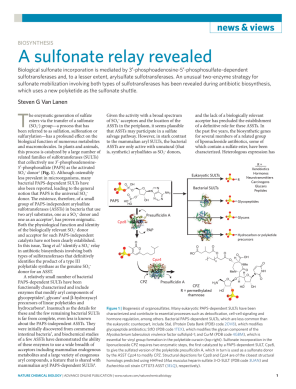
Highlighted in theNature Chemical BiologyNews&Views "Biosynthesis: A sulfonate relay revealed"
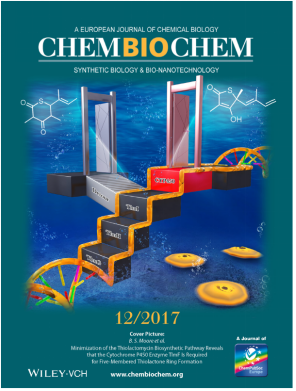
ChemBioChemCover Story,ChemBioChemReaders’ Choice 2019
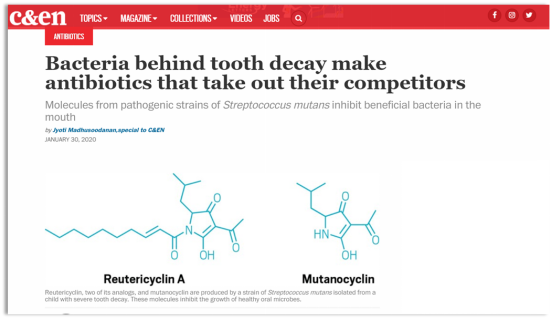
Highlighted in the news ofC&EN“Bacteria behind tooth decay make antibiotics that take out their competitors”
1. G. Liao, R. Sun, Z. Shen, Z. Luo, C. Pang, A. Wei, C. Mi, G. Wu, Y.-X. Li, F. F. Li, K. K. HOI*, X. Pan*, X. Tang*. Functional repurposing of a thiolase complex enables Friedel–Crafts acylation in antibiotic biosynthesis. Nature Communications, DOI: 10.1038/s41467-026-68910-6
2. Z. Cheng, B.B. He, K. Lei, Y. Gao, Y. Shi, Z. Zhong, H. Liu, R. Liu, H. Zhang, S. Wu, W. Zhang*, X. Tang*, Y. X. Li*. Rule-based omics mining reveals antimicrobial macrocyclic peptides against drug-resistant clinical isolates. Nature Communications, 2024, 15(1), 4901
3. X. Wang, N. Chen, P. Cruz-Morales, B. Zhong, Y. Zhang, J. Wang, Y. Xiao, X. Fu, Y. Lin, S. Acharya, Z. Li, H. Deng, Y. Sun, L. Bai, X. Tang*, J.D. Keasling*, X. Luo*. Elucidation of genes enhancing natural product biosynthesis through co-evolution analysis. Nature Metabolism, 2024, 6, 933–946
4. H. Zhang, X. Li, S. Huang, M. Cai, W. Shi, M. Liang, Y. Lin, J. Shen, M. Sui, Q. Lai, J. Dou, Z. Shao, X. Luo, Y. Ge*, X. Tang*. A semisynthesis platform for efficient production and exploration of didemnin-based drugs. Angewandte Chemie International Edition, 2024, 63(12), e202318784
5. X. Zou, Z. Hui, R.A. Shepherd, S. Zhao, Y. Wu, Z. Shen, C. Pang, S. Zhou, Z. Yu, J. Zhou, B.S. Moore, L.M. Sanchez, X. Tang*. Unveiling a CAAX protease-like protein involved in didemnin drug maturation and secretion. Advanced Science, 2024, 11(4), e2306044
Contact
Address: Gaoke Innovation Center,Guangming District, Shenzhen
Phone: +86-755-86967710
Email: webmaster@szbl.ac.cn
Postal Code: 518132
Copyright © 2025 Shenzhen Bay Laboratory. All Rights Reserved.