Explore SZBL

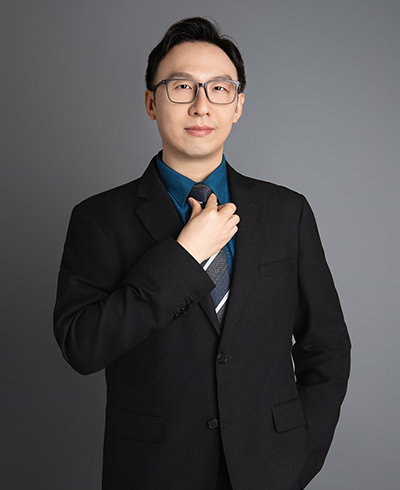
Institute of Systems and Physical Biology
yangyi(at)szbl.ac.cn
计算化学、计算生物学、人工智能
Junior Principal Investigator
Associate Investigator
Postdoctoral Researcher
Research Assistant
Ph.D. in Physical Chemistry
B.Sc. in Material Physics
Our group focuses on developing AI-based theories, methods, software, and computational platforms of molecular modelling and simulation, which we aspire to implement in studying interesting chemical, biological and pharmaceutical systems.
1) Developing new generation AI-based software and computational platform for molecular dynamics simulation.
2) Developing novel deep-learning-based molecular force field and enhanced sampling methods.
3) AI-based multi-scale molecular dynamics simulation for complex chemical reaction systems.
4) Virtual screening, design and crystal structure prediction of drug molecules based on AI-based molecular modelling.
5) Theoretical study of phase transitions in condensed systems.
Dr. Yang has been deeply involved in the theoretical exploration of computational chemistry, with a particular emphasis on molecular dynamics (MD) simulations. He has published over twenty academic papers in journals such asJ. Chem. Theory Comput., J. Physical Chem. Lett.andPhys. Rev. Lett.
Representative achievements:
1) Development and Application of Enhanced Sampling: He developed the MetaITS multi-scale enhanced sampling method, which has shown an improvement in sampling efficiency of more than an order of magnitude for specific systems. This method achieved the first reversible ice-water phase transition process in all-atom MD simulations.
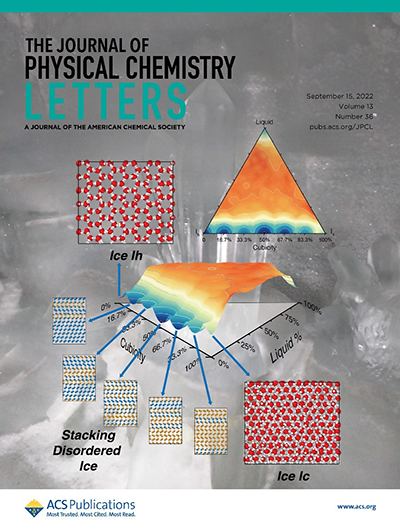
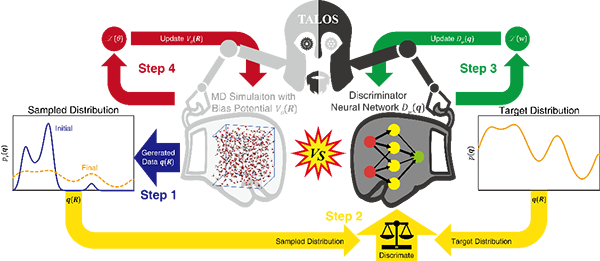
2) Deep Reinforcement Learning in Molecular Modelling and Simulation: Dr Yang and collaborators pioneered the introduction of deep reinforcement learning into MD simulations, leading to the development of a series of innovative algorithms.
3) Development of Molecular Dynamics Simulation Software: In collaboration with Huawei Technologies Co., Ltd., Dr Yang’s team developed an AI-based molecular dynamics simulation software, MindSPONGE. He proposed a novel “AI-like” programming architecture for next-generation MD simulation software, and the article (J. Chem. Theory Comput. 2023, 19, 4338-4350) was selected as “Editor’s Choice” and became one of JCTC’s “Most Read Articles” for last 12 months.
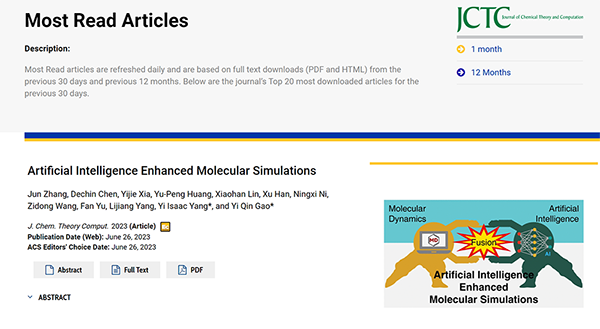
1. Zhang, J.; Chen, D.; Xia, Y.; Huang, Y.-P.; Lin, X.; Han, X.; Ni, N.; Wang, Z.; Yu, F.; Yang, L.;Yang, Y. I.; Gao, Y. Q., Artificial Intelligence Enhanced Molecular Simulations.J. Chem. Theory Comput.2023, 19, 4338-4350.
2. Li, M.; Zhang, J.; Niu, H.; Lei, Y.-K.; Han, X.; Yang, L.; Ye, Z.;Yang, Y. I.; Gao, Y. Q., Phase Transition between Crystalline Variants of Ordinary Ice.J. Phys. Chem. Lett.2022, 13, 8601-8606.
3. Lei, Y.-K.; Zhang, Z.; Han, X.;Yang, Y. I.; Zhang, J.; Gao, Y. Q., Locating Transition Zone in Phase Space.J. Chem. Theory Comput.2022, 18, 6124-6133.
4. Zhang, J.; Lei, Y.-K.; Zhang, Z.; Han, X.; Li, M.; Yang, L.;Yang, Y. I.; Gao, Y. Q., Deep Reinforcement Learning of Transition States.Phys. Chem. Chem. Phys.2021, 23, 6888-6895.
5. Zhang, J.; Lei, Y.-K.;Yang, Y. I.; Gao, Y. Q., Deep Learning for Variational Multiscale Molecular Modeling.J. Chem. Phys.2020, 153, 174115.
6. Zhang, J.;Yang, Y. I.; Noé, F., Targeted Adversarial Learning Optimized Sampling.J. Phys. Chem. Lett.2019, 10, 5791-5797.
7. Niu, H.;Yang, Y. I.; Parrinello, M., Temperature Dependence of Homogeneous Nucleation in Ice.Phys. Rev. Lett.2019, 122, 245501.
8.Yang, Y. I.; Niu, H.; Parrinello, M., Combining Metadynamics and Integrated Tempering Sampling.J. Phys. Chem. Lett.2018, 9, 6426-6430.
Contact
Address: Gaoke Innovation Center,Guangming District, Shenzhen
Phone: +86-755-86967710
Email: webmaster@szbl.ac.cn
Postal Code: 518132
Copyright © 2025 Shenzhen Bay Laboratory. All Rights Reserved.