Explore SZBL


Institute of Neurological and Psychiatric Disorders
joezhang@szbl.ac.cn
Cell biology,Genetics,Medicine and Translational Research
Junior Principal Investigator
Instructor
Postdoc Fellow
PhD
1. Application of patient-specific hiPSC-CMs in cardiovascular disease precision medicine and regenerative medicine
2. The role of non-cardiomyocytes in cardiovascular disease
3. Phenotypic high throughput screening
Dr. Zhang has long been focusing on basic and translational research in the cardiovascular research field. His research work aims to address the challenging questions in the cardiovascular research field using human induced pluripotent stem cells (hiPSCs) coupled with genome-editing technology. Dr. Zhang generated a novel double fluorescent hiPSC reporter tool that facilitates elucidation and isolation of human cardiac lineages, identification of cell surface marker, CORIN, and precise drug testing. Since the reporter line is available to the cardiac research field, it has been requested by multiple international research organizations. For the first time, Dr. Zhang and collaborators validate the pathogenicity of a variant of unknown significancein vitrousing patient-specific hiPSCs, which is the cornerstone of the application of hiPSCs in cardiovascular precision medicine. Based on his research work, Dr. Zhang has published 7 first-author/co-first author papers on top journals, such asCell Stem CellandCirculation. Up to date, he has published 21 papers in total. According to his excellent achievements, Dr. Zhang has been awarded a Mentorship Program Award by the American Heart Association, Best Poster Prize by the International Society for Heart Association European Section, and HOPE fellow by The Japan Society for the Promotion of Science, etc. Moreover, Dr. Zhang has been awarded a postdoctoral fellowship by the Tobacco-Related Disease Research Program (TRDRP) organization, USA.
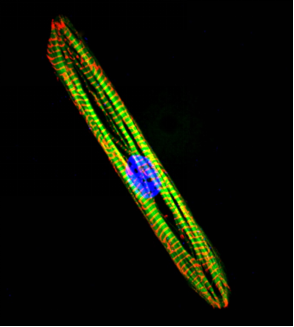
Human induced pluripotent stem cell-derived cardiomyocytes
1.Zhang JZ*, Belbachir N*, Zhang T*, Liu Y, Shrestha R, Wu JC. (2021). Effect of Cryopreservation on Human iPSC-Derived Cardiomyocytes for Assessing Drug Safety Response Profiles.Stem Cell Reports, 16(1):168-181. (* Co-first author)
2.Zhang JZ, Termglinchan V, Shao NY, Itzhaki I, Liu C, Ma N, Tian L, Wang VY, Chang ACY, Guo H, Kitani T, Wu H, Lam CK, Kodo K, Sayed N, Blau HM, Wu JC. (2019). A Human iPSC Double-Reporter System Enables Purification of Cardiac Lineage Subpopulations with Distinct Function and Drug Response Profiles.Cell Stem Cell, 24(5): 802-811.e5.
3. Ma N*,Zhang JZ*, Itzhaki I*, Zhang SL, Chen H, Haddad F, Kitani T, Wilson KD, Tian L, Shrestha R, Wu H, Lam CK, Sayed N, Wu JC. (2018). Determining the Pathogenicity of a Genomic Variant of Uncertain Significance Using CRISPR/Cas9 and Human Induced Pluripotent Stem Cells.Circulation, 138(23):2666-2681. (* Co-first author)
4.Zhang JZ, Guo HC, Wu JC. (2018). Applications of genetically engineered human pluripotent stem cell reporters in cardiac stem cell biology.Current Opinion in Biotechnology, 52:66-73.
5.Zhang JZ, Waddell HM, Wu E, Dholakia J, Okolo CA, McLay JC, Jones PP. (2016). FKBPs facilitate the termination of spontaneous Ca2+ release in wild-type RyR2 but not CPVT mutant RyR2.Biochemical Journal, 473(14), 2049-60.
Contact
Address: Gaoke Innovation Center,Guangming District, Shenzhen
Phone: +86-755-86967710
Email: webmaster@szbl.ac.cn
Postal Code: 518132
Copyright © 2025 Shenzhen Bay Laboratory. All Rights Reserved.