Autism refers to a group of complex neurodevelopmental disorders characterized clinically by deficits in social interactions and communication, the presence of restricted interests and repetitive behaviors. The worldwide population prevalence is about 1% and the prevalence of autism has continued to rise. More men and boys are currently diagnosed as autism, and 70% have concurrent conditions, such as epilepsy and depression. Studies showed that autistic patients have poor or very poor outcomes in terms of independent living, medical care, educational attainment, employment, and peer relationships which will impose a heavy social and economic burden on families and communities. The underlying mechanisms for autism are unclear and there is no effective preventive or treatment modalities that exist against autism, therefore, the development of early diagnostic, better therapeutic strategies and interventions are urgently needed.
The cause of autism is uncertain, but many studies have supported a genetic etiology which leads to a deficit in the neurodevelopmental process. Neuroligins (NLs, NL1-NL4) are a family of postsynaptic cell-adhesion molecules that are highly conserved evolutionarily and play an important role in the formation, maturation, and function of synapses. Importantly, NL3 and NL4 mutations are associated with autism.
Recently, researchers from Bo Zhang lab at SZBL published a review paper in Cellular and Molecular Life Sciences, titling “ Functional mosaic organization of neuroligins in neuronal circuits”. In this review article, they summarized the role of NLs on the development of neuronal circuits in invertebrates and vertebrates.
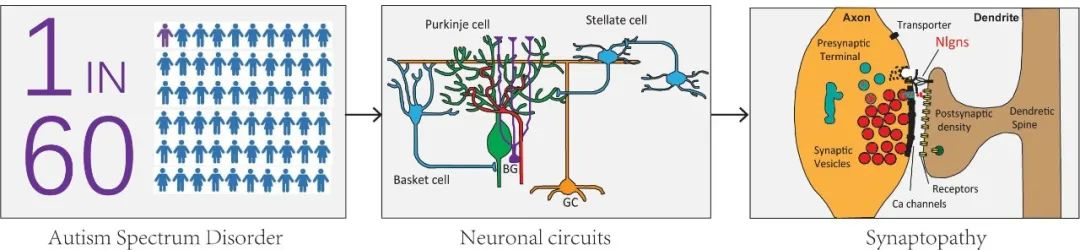
By comparing the role of NLs at the invertebrate neuromuscular junctions (NMJs) and in diverse rodent brain circuits, the author proposed that NLs work together with other synaptic adhesion molecules to orchestrate the assembly of functional circuits. They discussed the likely explanation for the inconsistent conclusions about the function of NLs in previous reports with in-vitro/in-vivo experiments. At the end of this review article, they highlighted some of those outstanding questions in the field: the underlying mechanisms of how NLs contribute to the development and function of diverse neuronal circuits, how NLs act in a synapse-specific manner, how NLs mediate their effects on the recruitment and/or stabilization of ion channels/receptors, and the function of NLs in non-neuronal cells including astrocytes and oligodendrocyte precursor cells.
The lead author of this review article is Dr. Liming Qin, other co-authors include Sile Guo, Ying Han and Xiankun Wang from Bo Zhang lab.