After teaching for 20 years at the University of California, San Diego (UCSD), Jing Wang rose to become department chair and tenured professor. Yet what he cherished most was not his string of titles, but a blackboard.
Each week, over 20 principal investigators (PIs) from the entire department gathered for a session where one member would present their current research. There was a special "rule": no PowerPoint presentations. Instead, they would improvise, writing their thought processes directly onto the blackboard in one fluid motion. Jing Wang deeply felt that this method could quickly reveal how one thinks. Young PIs could learn the thought processes of senior PIs, while senior PIs could gain fresh perspectives from the younger generation.
In January this year, Wang resigned from his teaching position in the United States to return to China as Director of the Institute of Molecular Physiology at Shenzhen Bay Laboratory. Over the past four months, he has read every paper by each young PI, meticulously examining their work.
"We must thoroughly understand the problem, not just produce results." Jing Wang told Science China Daily.
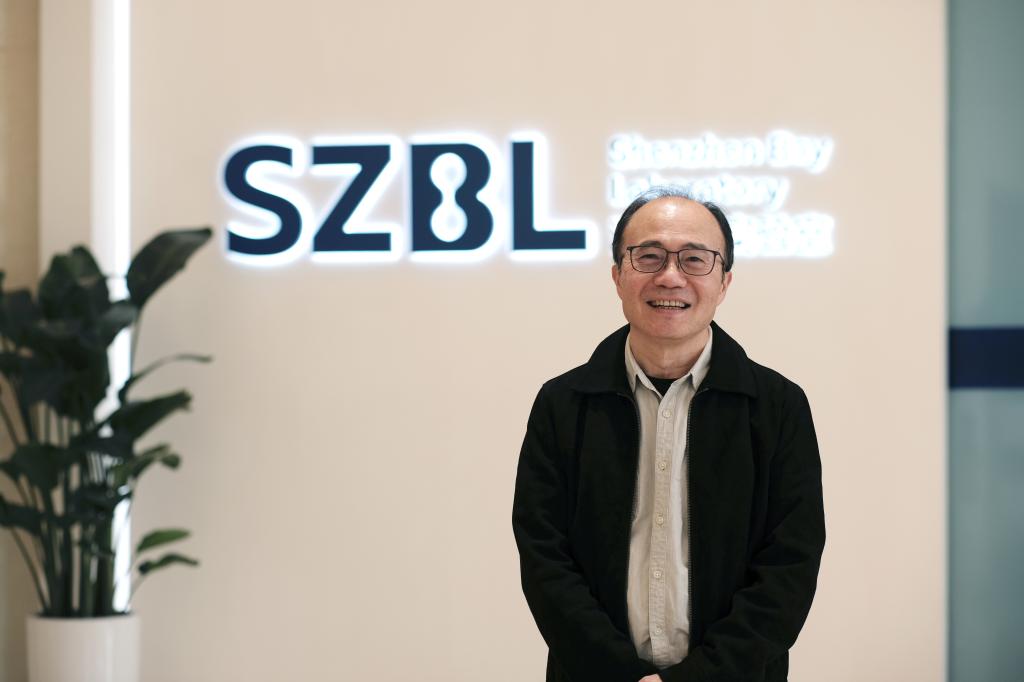
2025 Wang Jing at Shenzhen Bay Laboratory
Observing the Nervous System Through an Engineering Lens
As a seasoned neurobiologist, Jing Wang has long dedicated himself to unraveling how neural circuits process sensory information and regulate biological behavior. His research bears a distinctive hallmark: examining the nervous system through an engineering lens.
"On the surface, 'living' biological cells seem entirely unrelated to human-made engineering, yet their operational logic bears striking similarities." Jing Wang believes that abstract thinking from physics and control theory in engineering can fundamentally help scientists understand the nervous system.
This perspective and mindset stem from Jing Wang's early experiences.
Jing Wang was born into an ordinary family in Chengmai County, Hainan Province. His parents worked at a tractor factory, and the family lived in a cramped, single-story house without running water. As a child, Wang would rise before dawn daily, running 10 kilometers before breakfast. Noticing the diligent youth, the factory director converted a restroom into a small study for him.
In 1982, Jing Wang entered Tsinghua University's Department of Engineering Physics as Hainan's top science student, initially majoring in Accelerator Technology—a field whose influence endures to this day. While watching the film Forever Young, Jing Wang was moved to tears upon hearing the line: "How big is an accelerator? As big as the Tsinghua campus!"
During his junior year, Jing Wang switched to the optics major. He recalls that at that time, Tsinghua students could change majors freely without exams. Until his undergraduate graduation, Jing Wang maintained his habit of long-distance running and frequently discussed problems with his dormmates until lights-out, leading a fulfilling yet simple life.
Alongside his physics studies, Jing Wang also participated in research at Professor Ziwei Shen's lab in the Biology Department. "I want to study biology"—this voice grew increasingly clear in his mind. During his master's program, he decided to "change direction", entering the Biology Department to study under Professor Ziwei Shen.
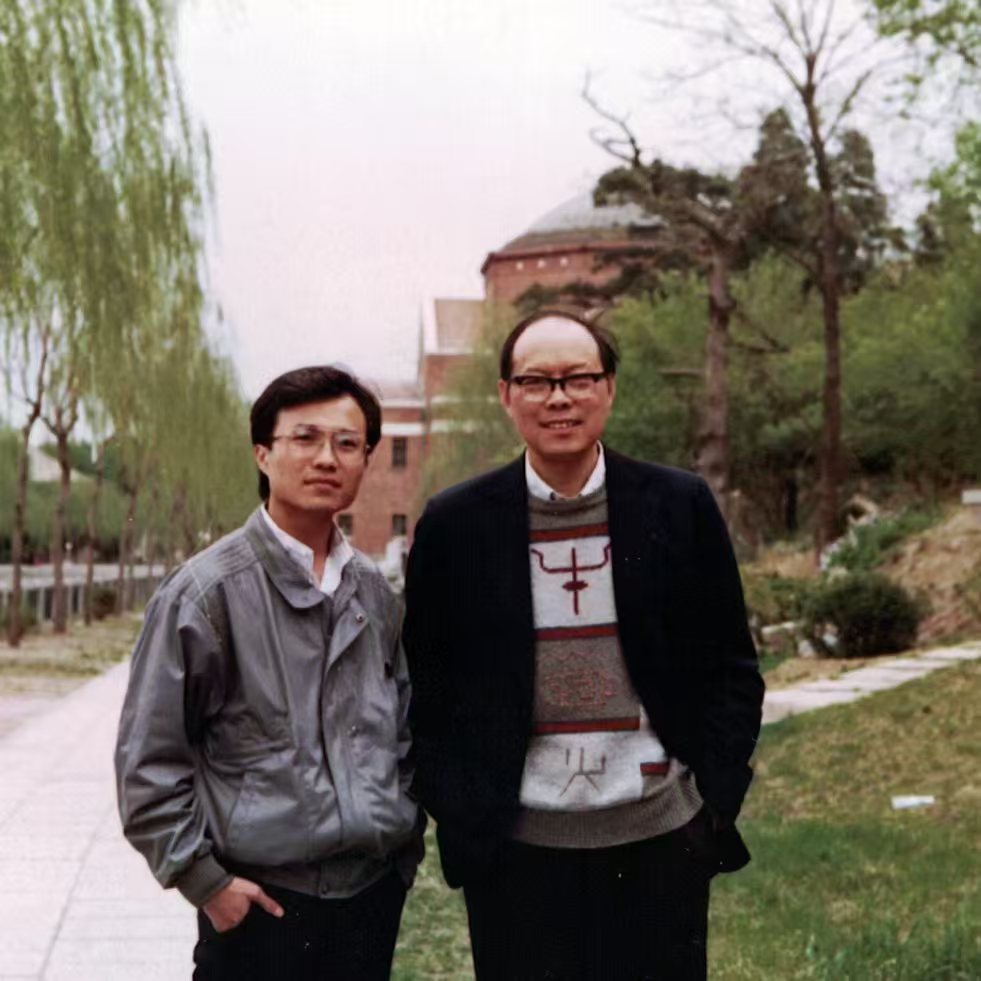
In 1990, Jing Wang (left) and Ziwei Shen at Tsinghua University
As his studies deepened, Jing Wang increasingly recognized how his early physics training had cultivated his exceptional abstract thinking. When confronting scientific problems, his instinct was not to get bogged down in details but to seek the essence—to understand "what its underlying structure is". This mindset laid the foundation for his later comprehension of the nervous system. Two senior figures in Tsinghua's Biology Department—Muming Pu and Nanming Zhao, both physics graduates—provided him with significant inspiration.
After completing his master's degree, Jing Wang decided to pursue a PhD in the United States. On January 16, 1991, he boarded a flight bound for America. That very evening, then-President George H.W. Bush ordered the launch of the Gulf War. The young Jing Wang, stepping onto foreign soil for the first time, witnessed this world-shaking historical event.
During his first six months in the U.S., Jing Wang researched molecular biology at the University of Texas Southwestern Medical Center at Dallas, but gradually lost interest. At this juncture, Professor Chunfang Wu from the University of Iowa extended an olive branch, inviting Jing Wang to study ion channels and neuronal electrical activity—precisely the direction Wang had sought.
Wang regards Professor Wu as his "first benefactor" in America. As a doctoral advisor, Professor Wu was meticulous and attentive, placing particular emphasis on cultivating students' critical thinking skills. Wu's requirement for Wang was clear: "By the time you earn your PhD, you must be able to thoroughly understand everything—and question everything."
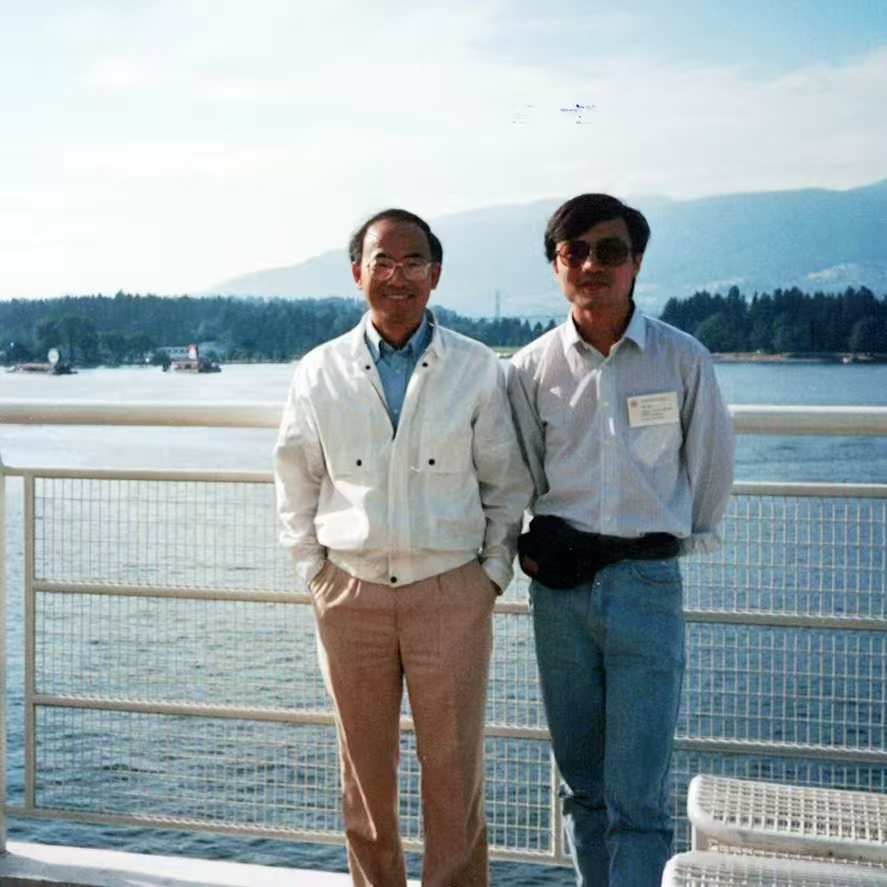
Jing Wang (right) and Chunfang Wu in Vancouver
Over the subsequent decades in America, Wang described his journey as one "filled with mentors at every turn". Though Wang had a solid foundation in English, he carried an accent and feared others might not understand him. A female instructor at the University of Iowa noticed his hesitation and told him: "Jing, speak up boldly. If someone claims not to understand what you're saying, they're lying."
Time has blurred the name of that white female teacher, but her encouragement undoubtedly gave Jing Wang the confidence to express himself boldly and persevere in America.
When Nutrition Shapes Desire: Insights from Fruit Fly Neuroscience
In 1997, Jing Wang went to Bell Labs as a postdoctoral fellow to study the world's most advanced imaging technology. At that time, Bell Labs was a veritable "paradise for fundamental science", gathering top talents across physics, neurobiology, and artificial intelligence. Among them were John J. Hopfield, who later won the Nobel Prize; Winfried Denk, inventor of two-photon microscopy; neurobiologist David Tank; computational neuroscientists Daniel D. Lee and Sebastian Seung, among others.
"Having lunch and conversations with them daily had a profound, subtle influence on me." Jing Wang reflects. He believes a researcher's growth relies not only on mentors but equally on an environment of constant exchange with peers.
Regrettably, Jing Wang's three years at Bell Labs coincided with its final golden era. After the bursting of the dot-com bubble in 2000, Bell Labs began its decline, prompting many scientists to depart.
Wang then moved to Columbia University, joining the lab of Nobel laureate Richard Axel. There, he pioneered the use of the calcium ion probe GCaMP for in vivo cellular imaging, driving a technical breakthrough in neuroscience. Subsequently, the Howard Hughes Medical Institute engineered eight generations of optimizations for this calcium ion probe. Today, this tool is widely used in many neuroscience laboratories.
At Columbia, Axel imparted Jing Wang's most profound lesson: never pursue research topics indiscriminately. Instead, select the most critical question and dedicate yourself entirely to solving it.
Jing Wang vividly recalls postdocs frequently proposing seemingly "interesting questions", to which Axel would bluntly respond, "I'm not interested. You can work on it yourself."
"In classical terms, it's about knowing what not to do in order to achieve what truly matters," Jing Wang remarked with a smile.
In 2004, Jing Wang joined UCSD as a faculty member, where he has remained for two decades. His most celebrated achievement during this tenure was a 2022 publication in Nature. Using fruit flies as a model, this work uncovered the neural mechanisms underlying the proverb "When the belly is full, thoughts turn to lust."
Through control group experiments, Jing Wang's team discovered that male fruit flies showed no sexual interest in females—when deprived of protein-rich food. Yet after a full meal, males prioritized courtship behavior.
At its core, this shift from feeding to courtship relies on a gut-secreted hormone: diuretic hormone 31 (Dh31). Consuming protein-rich food elevates this hormone's concentration, triggering behavioral shifts.
Thus, fruit flies' love is not dictated by the "heart", but by the "gut".
This work holds additional significance as the first attempt to interpret Maslow's Hierarchy of Needs theory through neurobiology.
In psychology, Maslow's Hierarchy of Needs is widely recognized. Human needs are arranged like a pyramid, with physiological needs at the base and spiritual needs at the apex. Previously, this theory had been largely conceptual and had limited direct biological evidence. This research provides a biological complement to the theory.
Over the past five years, Jing Wang's research has focused on the functional study of the gut-brain axis. "Neurological disorders like Parkinson's disease, depression, and Alzheimer's disease are actually closely linked to the gut." Jing Wang explains, "The gut-brain axis serves as a gateway to understanding the essence of neural modulation mechanisms—it may well become a frontier in future neuroscience."
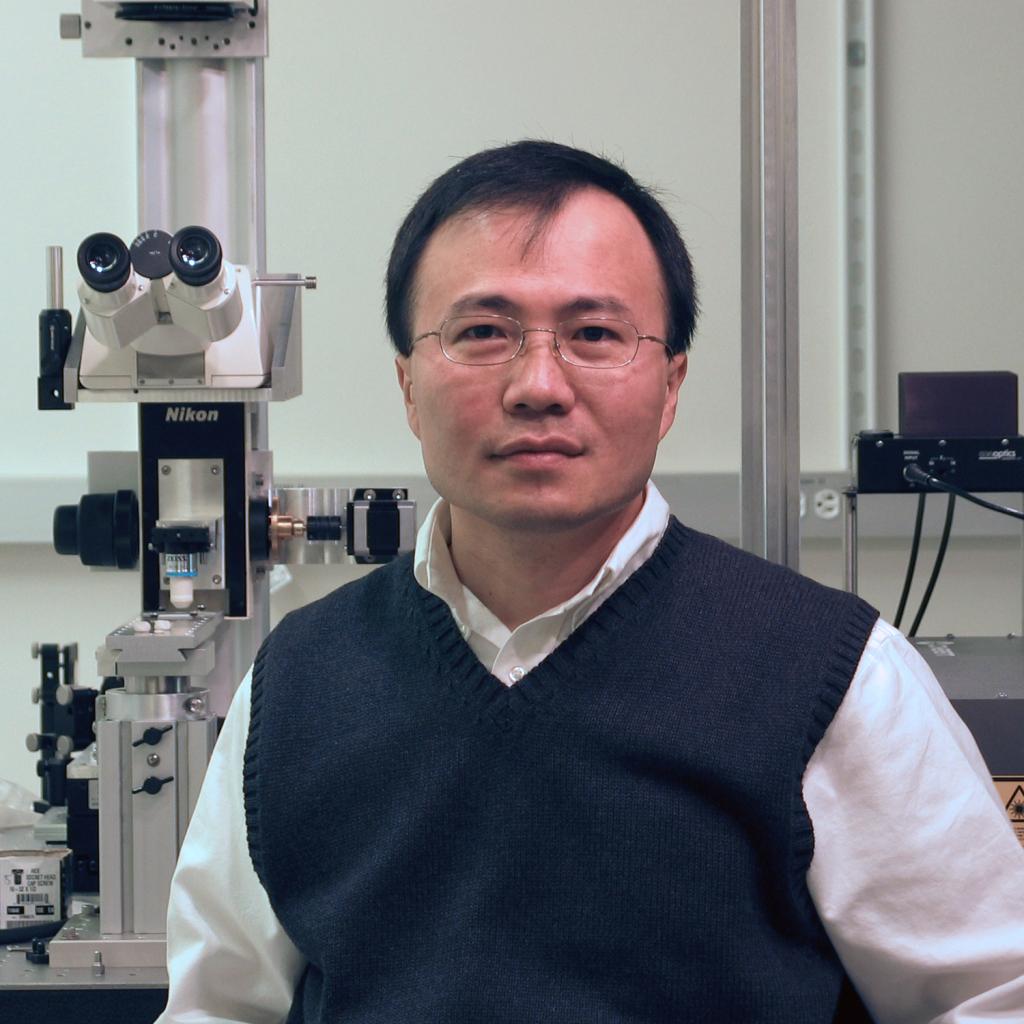
In 2004, Jing Wang at UCSD
Cultivating a Positive Feedback Academic Environment
In early 2025, Jing Wang returned to his homeland and joined the Shenzhen Bay Laboratory. The region's warm climate and abundant rainfall reminded him of the small county town where he was born and raised.
This top scientist's temperament mirrors that quiet town—gentle and unassuming. During an interview with Science China Daily, he was engaged in a meticulous task: reading every paper published by the lab's Junior Principal Investigators. He sought to genuinely understand each PI's research interests, direction, challenges, and potential, laying the groundwork for meaningful dialogue.
He refrains from judgment or direction, instead posing questions or suggesting fresh perspectives to the young PIs. When encountering concepts he doesn't fully grasp, he revisits textbooks or seeks insights from the younger researchers.
In neuroscience, there's a concept called "positive feedback loop"—a term that perfectly captures the academic environment Jing Wang strives to cultivate. Here, every PI pursues their own passions, and collectively, they generate a powerful synergy of positive energy.
Jing Wang recalls experiencing his own period of uncertainty during his second postdoc. Anxious and worried about his performance or securing a faculty position afterward, he bottled up his fears until he devised a backup plan:"If I can't land a faculty job, I'll sell optical microscopes to support my family!" This thought always brought him relief.
Jing Wang's willingness to invest time and energy in nurturing young researchers stems from a simple, heartfelt motivation.
His father had been a "barefoot doctor." In Jing Wang's childhood memories, whenever someone in the surrounding villages fell ill, his father would pedal his old bicycle to tend to patients. Years after his father's passing, families and children who had once received his help would still bring Jing Wang's mother a sack of rice, or a sack of taro, sweet potatoes, or pickled radishes.
"If one day my student brings me his most accomplished paper, I'll be perfectly content." Jing Wang says.
Source | China Science Daily