PART.01 A Mind Like the Moon, Aspirations Reaching Far
From his youth, Yi Yang harbored an unquenchable passion for chemistry. During one class, his teacher picked up a sliver of iron wire with tweezers, ignited it, and swiftly plunged it into a glass bottle filled with oxygen. Instantly, the wire burst into violent flames within the oxygen, erupting in dazzling sparks like a miniature fireworks display. Yi watched spellbound, his heart brimming with wonder and excitement.
Back home, he pooled money with friends to buy basic chemicals and lab equipment. They recreated the spark-filled experiments, reveling in the electrifying transformations of chemical reactions. The world of chemistry felt fresh and utterly captivating.
During middle school, Yi earned a provincial first prize in the Chemistry Olympiad, securing him direct admission to Shandong University. However, lacking a deep understanding of academic disciplines, he mistakenly chose Materials Physics, a field that seemed tangentially related to chemistry.
Though he had aspired to be a scientist since childhood, Yi also fantasized about becoming a tech entrepreneur like Bill Gates—perhaps even the world's richest man.
Upon entering university, Yi began experimenting with new ventures. As a freshman, he joined a business-savvy senior in selling MP3 players on campus. From sourcing inventory and distributing flyers to handling after-sales issues, Yi immersed himself in every aspect of the operation. He reflected, “Sales is truly backbreaking work.”
Under his mentor's guidance, Yi then began selling course notes. Targeting classes without dedicated textbooks that required closed-book exams, he collected high-quality notes and sold them to underclassmen.
During college, Yi also taught himself graphic design and programming. The logo and T-shirt designs for his class were his creations, and these skills would prove invaluable in his future research career.
Beyond business ventures, Yi actively campaigned for a student council position. He believed his successful securing of the largest sponsorship deal guaranteed his victory, only to be unexpectedly defeated.
After this tumultuous period, Yi began reevaluating his career path. After a year of selling MP3 players, his sales barely reached a dozen units, compounded by handling numerous tricky after-sales issues; Though he secured a minor position in the student council election, he realized that pursuing a “career in public service” wasn't for him. He also found little interest in his major studies. After careful consideration, Yi decided to return to the field of chemistry he truly loved.
Following thorough research, Yi resolved that if he was going to pursue postgraduate studies in a different discipline, he would aim for the top universities. He set his sights on Peking University, determined to realize his chemical aspirations there.
However, faculty and peers in his department were skeptical about Yi's prospects, particularly given his dabbling in “diverse subjects” and mediocre performance in specialized courses. More critically, his college didn't offer advanced chemistry courses, forcing him to self-study much of the required knowledge. Moreover, while most universities' graduate entrance exams only tested two subjects, Peking University's comprehensive chemistry exam covered five subjects, making it significantly more challenging.
Yet Yi saw an opportunity in this difficulty. Precisely because the high difficulty deterred many, it created more possibilities for him. He resolved to take the risk. Facing skepticism, he joked half-heartedly, “If I don't get in, I can always open a print shop.”
During his final university days, Yi immersed himself in problem-solving from 7 a.m. to 11 p.m. daily. His life condensed into a singular, straight line, pointing directly toward his future goal.
While theoretical courses could be self-taught, chemistry lab work required hands-on experience. Thus, he focused his studies on computational chemistry—a field that not only compensated for his lack of lab practice but also leveraged his programming expertise. Simultaneously, he took note of Professor Yiqin Gao, who had recently returned to China to join Peking University. This scholar, renowned for his contributions to computational chemistry, became Yi's top choice for an advisor.
After diligent preparation, Yi achieved his goal of entering Peking University and joined Yiqin Gao's research group. News of his cross-disciplinary admission spread rapidly, inspiring many classmates to pursue similar interdisciplinary graduate studies.
Entering Yan Yuan through the ancient West Gate of Peking University, the weathered traces on the vermilion-lacquered palace doors bore witness to centuries of history. The Bo Ya Tower stood serenely in the distance, bathed in sunlight. Another contemplative soul had arrived by the shores of Weiming Lake, where his ideas would take root, flourish, and grow in this fertile academic soil.
During his time at Peking University, Yi gained not only specialized knowledge but also a rigorous scholarly attitude and a pure passion for research. “At Peking University, the most crucial aspect was the refinement of my academic skills. It involved not only meticulously analyzing and scrutinizing data but also repeatedly verifying and reflecting on every hypothesis and set of experimental results.” Yi said.
Professor Gao often reminded his lab members that research should not merely chase hot topics or high-impact-factor publications. Truly valuable research must carry profound scientific significance. Even if certain fields appear trendy and yield well-published papers, without scientific merit, they ultimately prove fleeting. Yi emphasized, “This is especially true in computational chemistry.”
When he first joined the group, Yi was full of ambition, eager to make his mark in complex chemical systems. Yet during his early years as a doctoral student, he wandered through multiple different systems, searching for a breakthrough. No matter how hard he tried, he seemed to stall at critical moments.
In computational chemistry, establishing oneself hinges on two paths: either surpassing predecessors in a specific system or pioneering a novel methodology.
Despite slow progress during his first three years, Yi avoided anxiety. Like a cat in Peking University's campus, he moved calmly through the bustling academic life, maintaining inner composure.
Finally, while studying amyloid protein aggregation, Yi employed the Integrated Tempering Sampling (ITS) enhanced sampling method developed by Professor Gao's group. This enabled him to deeply elucidate the aggregation process of the Aβ37−42 peptide in both water and salt solutions.
Previous studies indicated that Aβ peptide aggregation is a key component of Alzheimer's disease (AD) pathology, but the influence of different solutions on this process remained unclear. Through all-atom molecular dynamics simulations and transition pathway theory, Yi observed that NaCl solutions significantly accelerated the Aβ peptide aggregation process, revealing how salt effects influence aggregation pathways and rates. The findings demonstrate that NaCl alters aggregation mechanisms, not only affecting final structures but also significantly regulating aggregation kinetics, offering new insights into AD pathology.
As his research deepened, Yi developed a strong interest in developing sampling methods for molecular dynamics (MD) simulations. The ITS method, with its unique global sampling capability, enabled him to rapidly simulate reaction trajectories in complex molecular systems. By constructing non-Boltzmann distributions, this approach significantly expands the potential energy sampling range of a system, enhancing free energy calculation efficiency while demonstrating relative advantages in resource requirements.
Simultaneously, the term “Metadynamics” began appearing frequently in his research landscape. This approach is specifically designed for fine-grained local sampling. While ITS excels at accelerating degrees of freedom across the entire system, its effectiveness is limited for accelerating specific process degrees of freedom—an issue Metadynamics is particularly well-suited to address.
Yi's curiosity and eagerness toward Metadynamics grew accordingly. “At the time, I built a framework based on Metadynamics principles. Though somewhat rough, it yielded promising results.” He conceived the idea of delving deeper into Metadynamics, hoping to broaden his research capabilities by mastering various enhanced sampling techniques.
The optimal path to master this technology was joining a research group specializing in it during his postdoctoral phase. Thus, Yi's goal became clear. He compiled a detailed list of target groups, each a leader in the field of enhanced sampling. Naturally, Professor Michele Parrinello—the inventor of this technique and one of the founders of molecular dynamics simulation methods—topped the list.
The path of science sometimes brings unexpected luck. Yi didn't even get the chance to use that list; he secured Professor Parrinello's approval after just one interview. Yi recalls Professor Gao's skeptical expression when he shared the news. Yet weeks later, Professor Parrinello's formal offer arrived. Yi subsequently set foot on Swiss soil, where he deeply experienced the Italian scientist's unpretentious nature and unique creativity.
Before his departure, Professor Gao's words remain etched in Yi's memory. He said: "Perhaps because your advisor is older, you might notice he lacks the quick wit of younger researchers in many areas—you might even feel he's less intelligent than you. It's like watching him struggle to hold a cup steady, while you not only hold it perfectly but can even perform acrobatic tricks with it. But remember, he created that cup. Without him, you wouldn't be able to perform these tricks today. So you must respect him, learn with an open mind, and recognize that as an authority and pioneer in this field, he possesses unique insights. Discovering and learning from these is what truly matters."
Professor Gao's words often echoed in Yi's ears. He not only taught Yi how to become an expert in research but, more importantly, how to conduct himself—how to approach every mentor and opportunity in life with humility and reverence. This passage later became Yi's most popular post on Zhihu.com, garnering thousands of likes.
Encountering a mentor who can enlighten and guide you through life is truly rare. Professor Gao's teachings and example permeated every step of Yi's growth, like a steady stream subtly shaping his academic pursuits and life's direction.
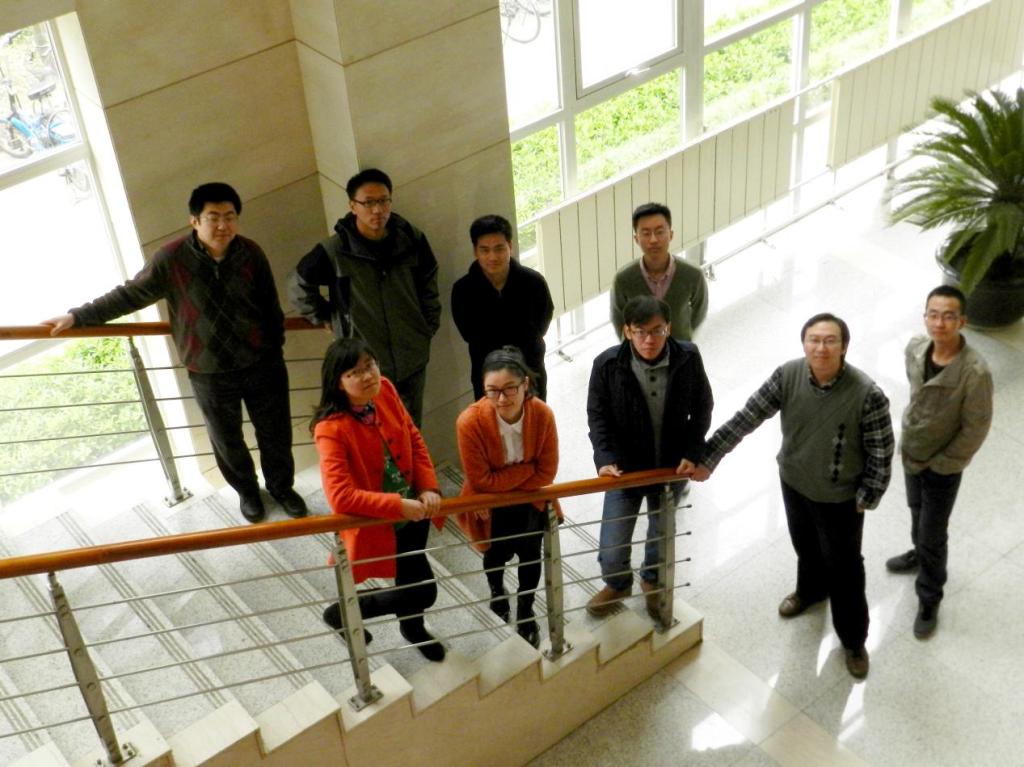
Yi Yang in Professor Gao's Group at Peking University
PART. 02 Against the Current, Stagnation Means Retreat
Whenever his thoughts stalled, Yi would descend the stairs and stroll along the shores of Lake Lugano.
The lake flowed quietly, its banks lined with buildings that appeared solemn and dignified beneath winter's silver blanket. The Romanesque twin towers spoke of historical depth and the tempering of time, while the Alps loomed faintly through the mist.
Since joining Professor Michele Parrinello's research group at ETH Zurich in January 2016, Yi had witnessed all four seasons in Lugano.
In spring, camellias hung crimson clouds from their branches; summer bathed the earth in golden sunlight; autumn draped trees in rich, vibrant robes. Now, as Lugano welcomes its soft, white snow once more, the entire city is adorned with crystalline beauty.
Yet Yi is uncertain how long this scene before him will last.
When he first arrived, Professor Parrinello held high expectations for him, visiting the lab daily to inquire about progress, offering guidance and support.
Yet a year later, Yi had yet to achieve the anticipated breakthrough. The programs he wrote and simulations he ran churned endlessly through vast oceans of data, yet the path to the answer remained elusive.
Unlike experimental chemists who conduct experiments with beakers and test tubes, computational chemists build models on computers in pursuit of truth. For these pioneers of theory, workload isn't the decisive factor. Even when faced with extensive programming tasks, they must first develop a clear thought process before typing away at the keyboard.
Professor Parrinello is renowned worldwide for his significant contributions to theoretical and computational chemistry. As a result, his research group members enjoy unprecedented freedom to explore purely theoretical domains—a privilege unavailable to many other teams.
Capturing inspiration is like searching for a star in the night sky—sometimes it requires time to polish before the brilliant starlight is revealed. Some scientists even rent a small boat to float on a lake, contemplating in tranquility.
Yi Yang, a down-to-earth man from Shandong's Spring City, lacks such leisurely inclinations. When stuck in a mental rut, he typically heads downstairs for a stroll. Amidst the winding cobblestone alleys and along the mirror-like shores of Lake Lugano, he measures the city, seeking moments of sudden insight.
Coincidentally, a colleague in his research group was studying the crystallization process of silicon dioxide. This complex material phase transition system provided Yi with inspiration.
In chemical reactions, a high reaction barrier is a critical issue, and the crystallization process of silicon dioxide is no exception. Reactants must absorb substantial energy to overcome this “mountain peak” and transform into products. This transition may take several seconds or longer, while in computer simulations, processing a few seconds of data can require hundreds or even thousands of hours of computation. To address this, computational chemists have developed various methods to accelerate the simulation process, making it possible to capture and analyze these high-barrier reactions.
While Metadynamics can accelerate rare events, studying free energy changes during crystallization phase transitions—which involves calculating variations of the same property across different temperatures—requires running multiple simulations simultaneously, a time-consuming process.
Inspired by his colleagues' work, Yi had a flash of insight. The ITS method developed by Professor Gao's group during his doctoral studies acts like a bridge between high and low temperatures, broadening the system's energy distribution and enabling faster thermodynamic property calculations. Crucially, ITS allows thermodynamic properties at different temperatures to be computed by simulating at a single temperature.
Yi eagerly began experiments, combining both methods to simulate the crystallization process of silicon dioxide. His initial goal was simply to use ITS to simulate properties at multiple temperatures from a single run, eliminating the need for repeated simulations. The results exceeded expectations: incorporating ITS not only covered multiple temperature ranges with a single simulation but also increased the conversion efficiency of each simulation by an order of magnitude.
Professor Parrinello was profoundly astonished by the results. He began frequent discussions with Yi about research details, delving deeply into every technical aspect of the ITS method.
Subsequently, Parrinello's group successfully employed the MetaITS method to achieve phase transitions in the TIP4P/Ice water molecular model system. In reality, simulating water's transformation from liquid to ice in all-atom molecular dynamics simulations is an exceptionally challenging task. Previously, only one successful “spontaneous” freezing case had been reported worldwide, yet it proved nearly impossible to replicate. The MetaITS method pioneered the first truly controllable simulation approach for reversible phase transitions from pure water to ice in all-atom molecular dynamics simulations.
Yi recalls, “Even when the first year didn't yield the expected results, I still found joy in the process. That period allowed me to deeply appreciate the newly developed VES method and PLUMED software code by Professor Parrinello. This provided me with profound nourishment in my systematic engineering studies and laid a solid foundation for subsequent software development.”
Whether immersed in the world of formulas, functions, and code, or embraced by scenic beauty and culinary delights, Yi always found joy effortlessly.
Meanwhile, a burgeoning new technology was gradually entering his research journey, ultimately reshaping the trajectory of his life.
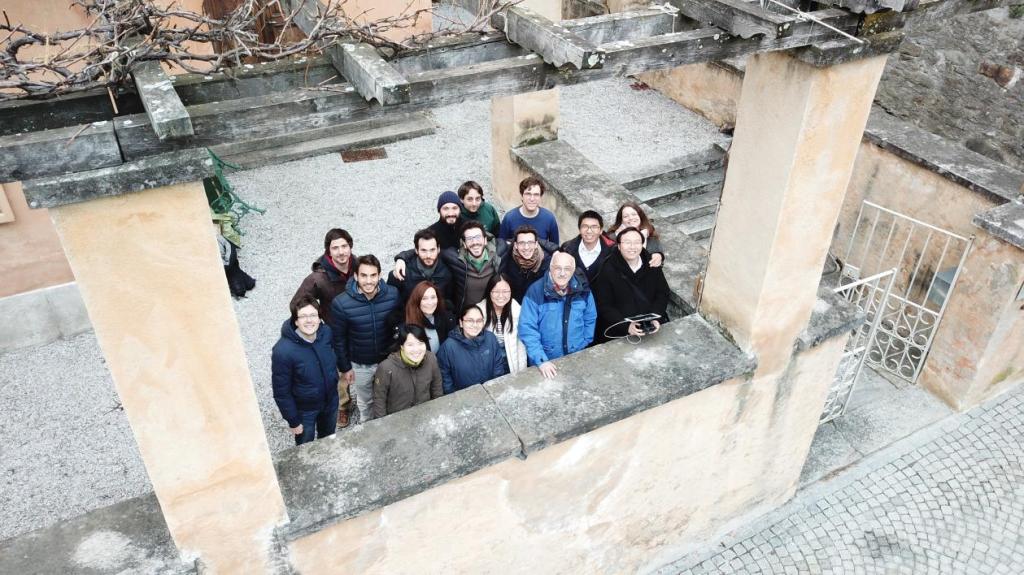
Yi Yang in Professor Michele Parrinello's Group at ETH Zurich
PART. 03 Riding the Wind, Setting Sail
At the end of 2016, a mysterious Go player named “Master” dominated major Go websites, achieving a staggering 60 consecutive wins. The truth was eventually revealed: Master was the evolved third generation of AlphaGo.
In 2016, AlphaGo's second iteration had already faced off against Sedol Lee, who lost 1-4. Subsequently, the Chinese Chess Association announced that Jie Ke, then ranked world number one, would challenge AlphaGo. Jie Ke lost all three games.
This may have been one of AI technology's most significant moments before ChatGPT's emergence.
Yi, residing in Switzerland, was captivated by the overwhelming news coverage. AlphaGo's dominance over the Go world signaled a monumental shift in human intellectual domains. As a researcher equally dedicated to tool development, Yi keenly recognized that artificial intelligence might reveal deeper patterns and dynamics in molecular motion through algorithm optimization and predictive accuracy.
As he delved deeper into AlphaGo's technology, Yi saw profound connections between AI and his own field of molecular simulation.
In simulations, each molecular trajectory—much like every move in Go—represents an exploration within vast space. Molecules traverse different energy valleys seeking optimal ensembles, while AI navigates the board seeking decisive advantages.
Each AlphaGo move represents the optimal response selected through feedback after sampling countless potential board configurations. Similarly, enhanced sampling in MD simulations is also feedback-based sampling, continuously adjusting to reach the optimal solution.
The AI's chess-playing process is fundamentally a form of sampling, while enhanced sampling in MD simulations can essentially be viewed as reinforcement learning.
“The processes are so strikingly similar that AI and MD are inherently suited to be combined.” Yi remarked. Since MD's sampling work mirrors AI chess-playing, integrating AI deep learning into MD sampling represents a natural fusion.
Drawing on AI deep learning principles, Yi and collaborators pioneered the introduction of deep reinforcement learning into MD simulations. They established a novel method: Targeted Adversarial Learning Optimized Sampling (TALOS).
At TALOS's core lies a highly adversarial “game.” The sampling engine and neural network discriminator alternately challenge each other, dynamically reshaping the system's free energy landscape through endless rounds of competition. This forces the system's behavior toward the user-defined target distribution.
Yi selected complex biophysical systems for testing, where towering “free energy barriers” typically require substantial computational time to traverse.
Yet TALOS acts like an agile “traveler,” finding the most efficient shortcuts. By continuously adjusting the Hamiltonian, it rapidly propels the system toward the target distribution.
Traditional enhanced sampling methods rely on manually defined mathematical formulas and physical laws, often restricting sampling to predefined reaction coordinates. When encountering novel distribution forms, parameters require manual adjustment and formula re-tuning—a complex and time-consuming process.
Through deep reinforcement learning, TALOS eliminates dependence on intricate mathematical mappings by autonomously optimizing sampling strategies through continuous learning. This capability dramatically enhances sampling efficiency while reducing the need for human intervention.
Yi stared at the astonishing results on the screen, convinced that applying TALOS's deep reinforcement learning solely to accelerated sampling would be an underutilization of its potential. This approach holds broader promise—not only in identifying rare events but also in revealing deeper chemical reaction mechanisms and more complex biological systems.
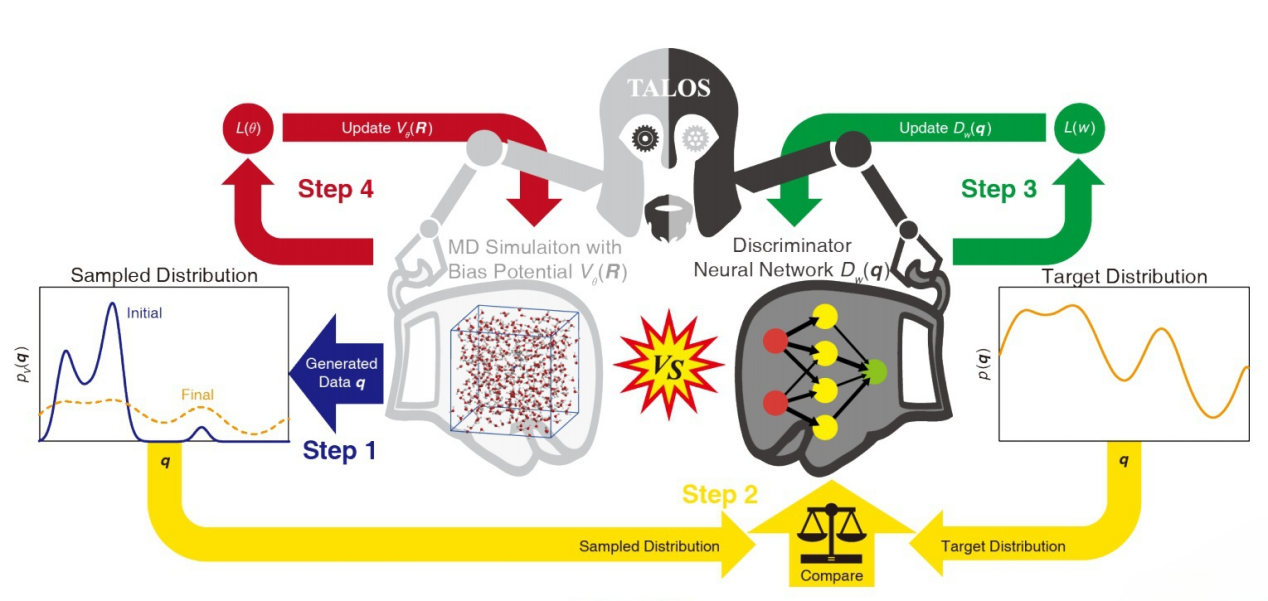
Zhang, J.; Yang, Y. I.; Noé, F. Targeted Adversarial Learning Optimized Sampling.J. Phys. Chem. Lett.2019, 10 (19), 5791−5797
Armed with this breakthrough in integrating AI with molecular simulations, Yi left Switzerland in 2019 for the vibrant city of Shenzhen. This metropolis, like an information-driven crucible, was rapidly gathering cutting-edge technological forces at an astonishing pace.
At that time, Shenzhen Bay Laboratory was still a nascent research incubator, calling upon idealistic scientists to pioneer new frontiers at the intersection of IT and BT. Yi perfectly aligned with this rhythm. Growing alongside the lab, he embarked on the journey of integrating AI with molecular simulation. Empowered by Shenzhen's momentum, his research vessel sailed with increasing steadiness and speed. Looking back, Yi realizes how profoundly correct his decision to come to Shenzhen was.
In subsequent research, Yi employed reinforcement learning to generate molecular force fields. Traditionally, constructing such force fields followed a “bottom-up” approach—meticulously fitting various energy terms within potential functions, a laborious and time-consuming process. However, by employing reinforcement learning strategies, he shifted perspectives to a novel “top-down” approach. Based on MD simulation trajectories, the method directly “learns” and generates a complete molecular force field.
This reinforcement learning strategy not only reduces reliance on prior knowledge but also automatically generates and optimizes simulation paths. Particularly in exploring transition states for chemical reactions, Yi conceptualizes reinforcement learning as a “virtual player”. By continuously optimizing sampling strategies, it can directly identify transition states within MD simulations, thereby revealing reaction mechanisms. “The introduction of deep reinforcement learning methods enables us to achieve what was previously impossible.” Yi states.
AI-empowered molecular simulations are poised to become pivotal tools in future scientific research, with this technological revolution gaining unstoppable momentum. Only by recognizing its potential and boldly harnessing this power can one stand at the forefront of innovation.
However, an invisible barrier seems to persist between emerging AI technologies and traditional molecular simulation tools. Particularly when applying reinforcement learning to molecular simulations, real-time data interaction with AI during runtime is essential—not training after simulations conclude. Legacy simulation software, constrained by outdated code and closed architectures, struggles to meet real-time data exchange demands.
Previous AI platforms, not tailored for molecular simulations, lacked direct support for molecular systems, often causing computational bottlenecks and data transmission delays.
Yi recognized that to fully unleash AI's potential and drive more efficient molecular simulations, a new software must be developed that integrates AI and molecular simulation from the ground up, enabling comprehensive support for real-time feedback and intelligent model adjustments.
Although the team wrote some core code, developing an entirely new software suite from scratch was nearly impossible with the limited resources of a single research group. Yi stated, “Initially, we only aimed to create an AI-assisted plugin.”
In fact, even as the AI wave was just beginning to rise, within the office towers of Shenzhen, tech giants were quietly building their strength. With formidable confidence and fearless resolve, they were preparing to weather the storm of the artificial intelligence era.
The turning point came at an industry conference where Yi learned that a domestic high-tech company had made significant progress in developing an AI computing framework—MindSpore.
MindSpore offers developers a simplified programming experience with support for automatic differentiation and parallel computing, precisely addressing the need for real-time training and feedback in molecular simulations.
For MindSpore, finding seed applications to validate the platform's potential and establish its first success stories was equally urgent. Thus, this collaboration ignited like a spark meeting dry kindling—a perfect match.
The MindSpore team committed substantial resources, collaborating with Shenzhen Bay Laboratory and Peking University to advance a new generation of molecular simulation software named MindSPONGE.
During the software's early development, communication between Yi Yang and the MindSpore team was almost constant. Countless days and nights saw his suggestions and feedback appear in the development group's work chat. During that period, nearly every MindSpore developer knew Yi Yang. His name and list of issues were like engraved annotations in the world of code—breaking through the shackles of integrating AI and molecular simulation.
Starting from a two-person task force, the team gradually expanded into an independent research group. Yi wrote MindSPONGE's code from scratch, penning over 20,000 lines within just one year. This code chronicles countless attempts, refinements, and iterative iterations.
On April 25, 2021, MindSPONGE—China’s first-ever molecular simulation framework, has been launched. By integrating deep learning with large-scale parallelization, it filled a critical gap in China's intelligent molecular simulation field.
In August 2022, the second-generation MindSPONGE emerged. It not only transformed molecular simulations into AI training processes but also supported small-batch processing and enabled parallel simulation of multiple trajectories. Researchers can directly optimize simulation results, bypassing the trial-and-error cycles typical of traditional molecular simulation software.
These features truly position MindSPONGE as the next-generation intelligent molecular simulation software.
Over a decade ago, computational chemistry was a niche discipline with few specialized job opportunities. Molecular simulation technology remained an exploratory field for a select few researchers, attracting little attention.
Today, driven by rapid advancements in AI, cloud computing, and big data, computational chemistry has gained unprecedented vitality. Its applications have expanded into diverse scenarios, demand has surged, and career opportunities have shifted from scarcity to diversity.
Technological progress has unlocked new possibilities, sparking growing interest and deeper exploration of this frontier field.
In August 2021, the MindSpore SPONGE Summer School emerged in response to this trend. Collaborating with multiple research institutions and universities, it brought together experts and educators in molecular computing. To date, the summer school has successfully held four sessions. Its in-person events have attracted thousands of participants, while its online courses have drawn tens of thousands of students and professionals from medicine, biology, physics, chemistry, computing, and other fields to participate free of charge.
Yi's journey in AI for Science has only just begun. As a brand-new software, MindSPONGE still has many areas that need refinement. He will join hands with countless like-minded individuals to reinterpret the laws of nature at the most microscopic scale, reaching a world never before explored through every line of code and every model in the future.
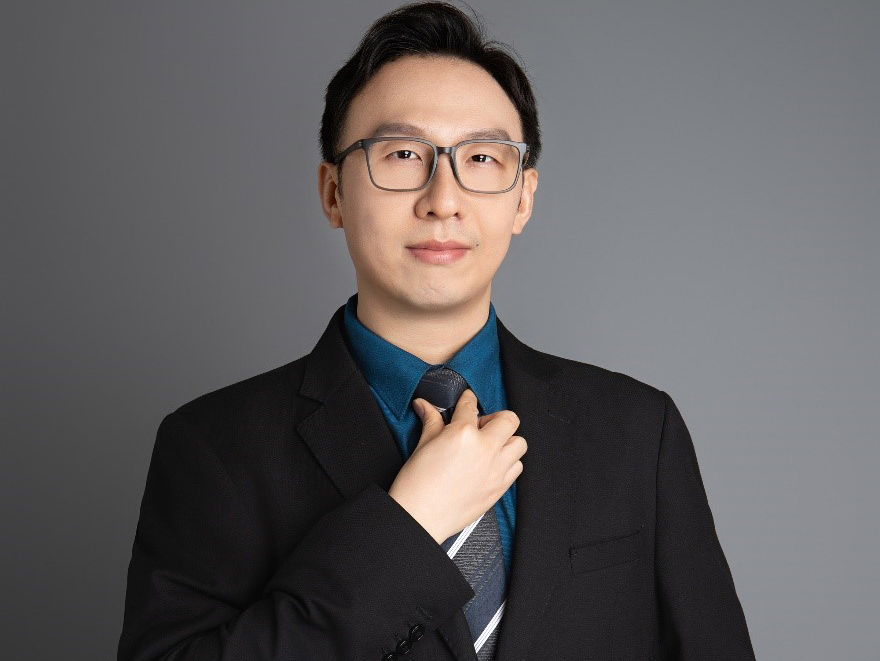
Dr. Yi Yang is a Junior Principal Investigator at the Institute of Systems and Physical Biology, Shenzhen Bay Laboratory. He earned his Bachelor of Science in Materials Physics from Shandong University in 2010. In 2015, he received his Ph.D. in Physical Chemistry from Peking University under the guidance of Professor Yiqin Gao. From January 2016 to February 2019, he conducted postdoctoral research at ETH Zurich under Professor Michele Parrinello, a pioneer in molecular dynamics simulation methods and recipient of the Dirac Medal, the highest honor in theoretical physics. Joined the Institute of Systems and Physical Biology at Shenzhen Bay Laboratory as an Associate Investigator in April 2019, promoted to Junior Principal Investigator in May 2024. In collaboration with Huawei MindSpore, the group developed MindSPONGE—a proprietary, AI-based next-generation molecular dynamics simulation software.
For more Information:https://en.szbl.ac.cn/info/1015/1556.htm
Dr. Yang received Huawei's inaugural Huawei Ascend Expert (HAE) honor in 2020 and currently serves as a MindSpore Technical Committee Member and Senior Mentor.
Research Areas: The group focuses on developing AI-based theories, methods, software, and computational platforms of molecular modelling and simulation, which we aspire to implement in studying interesting chemical, biological and pharmaceutical systems.
1) Developing new generation AI-based software and computational platform for molecular dynamics simulation.
2) Developing novel deep-learning-based molecular force field and enhanced sampling methods.
3) AI-based multi-scale molecular dynamics simulation for complex chemical reaction systems.
4) Virtual screening, design and crystal structure prediction of drug molecules based on AI-based molecular modelling.
5) Theoretical study of phase transitions in condensed systems.
The group maintains ongoing postdoctoral recruitment, offering an excellent research environment and competitive compensation.
Contact: Interested candidates should prepare the required materials in accordance with the general rules for postdoctoral applications in academia and send them to: yangyi@szbl.ac.cn.