As the novel coronavirus outbreak spread unexpectedly throughout China, the alarm was rang to us that our scientific countermeasure should always be on preparedness.
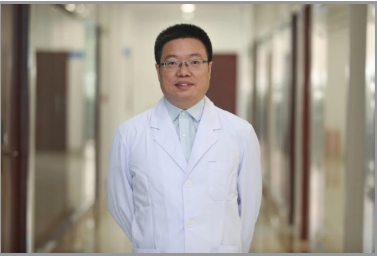
Just in the initial stage of the outbreak, WANG Tao’s research group had joined in the battleground to fight against the coronavirus disease.
Extensive study on coronavirus was promptly arranged by WANG Tao to his group. He effectively establish experiment proposals based on the sequential analysis to the viral genomics. So far WANG’s group has been working around the clock, searching into a few acquired sample of proteins which are believed to have crucial function during viral transmission and replication of the disease.
“Considering that the novel coronavirus is a highly-mutable RNA virus, there could be such possibility in the future that novel coronavirus mutates into new forms which can cause repetitive transmission, or even develop into human-to-human transmitted viruses”.
It is an urgency to find ways for control and treatment, WANG continued to explain, that only the farther and deeper understanding we can gain into the novel coronavirus, can we take on more specifically targeted and effective measures to its control and prevention, detection and testing, as well as drug and vaccine development.
The drug that is currently considered to have the potential to successfully treat novel coronavirus is called Remdesivir. Designed by Gilead Sciences, the drug realizes its efficacy by functioning on the protein machinery of RdRP, one that catalyzes the replication of RNA in the viruses. If, theoretically speaking, a new compound could be identified for interrupting RdRP’s replication of RNA, then the further produce of viruses could be blocked, and the disease would possibly be controlled and treated.
WANG’s group has made the discovery on the functional mechanism of and inhibitor for the RdRP of COVID-19 as a key focus for research.
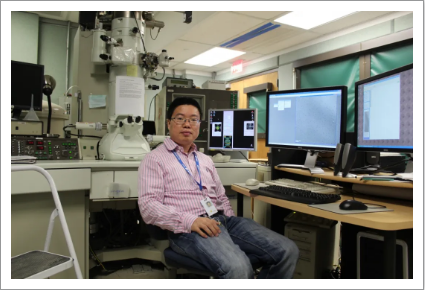
It’s expected that the group could use x-ray crystallography and cryo-EM to identify high-resolution structures of targeted proteins and related compounds of the COVID- 19 viruses, and through acquiring the transmission as well as infection mechanisms of the viruses, to provide new clues that might help optimize drug structures and drug design, as well as fast detection to the virus.
“We believe that discovery for drugs against COVID-19 will be focused on the viral absorption and penetration, and RNA replication of the virus. There should be effective drugs developed specifically targeting in these processes”, said WANG.
“A Place with Immense Opportunities”
Looking back to 2019, WANG Tao came to Shenzhen Bay Laboratory (SZBL) among the first batch of scientists who joined the laboratory. The reason is quite simple for him to made the choice, saying, “SZBL offers great opportunities for individual development. I am able to leverage what I have to do what I enjoy and desire, and of course, with high attention and full devotion”.
Ever since then, WANG and his group started seeding their dream and career here at SZBL, a burgeoning place for science.
Talking of his professional area, WANG said: “ It is like figuring out the structure of an architecture or the layout of a building. Before we can prevent, control and treat one disease, we should go first with the functional mechanisms and the interplay of all biological molecules that make up for or relate to it ”.
“Based on x-ray crystallography and cryo-EM technologies, and with combination of biochemistry and molecular biology methodologies, the research of our group uses analysis on the structure of protein and bio macromolecule at atomic resolution to understand the relation between molecular structures and biological functions, and by this, to conduct design on molecular drug screening”.
WANG registers confidence with what the group endeavors to in research, which shares strong alignment with SZBL’s scientific mission in addressing health issues for the civic population. The group has been sharpening focuses on the macromolecular structural study and drug design concerning degue viruse, influenza virus, drug- resistant bacteria and other major diseases, in which WANG, as the group leader, has already fostered experience for more than 10 years.
“Sci-Tech Mastery in the Service of Our Nation”
WANG described himself “a young fledgling” when recalling the time he started his career in science. It was not until meeting LIANG Dongcai, a Chinese academician and also WANG’s mentor, that WANG has truly acquired the key to academic and scientific research.
WANG’s mentor, Academician LIANG, used to be as one of the students of Dorothy Crowfot Hodgkin, who also known as an Oxford professor and Nobel Laureate of 1964. After his completion of study on x-ray crystallography with Prof. Hodgkin, LIANG went back to China, founding the first laboratory of protein crystallography in the country. The laboratory conducted research on insulin structural tests, which successfully delivered the world’s highest resolution for insulin structures at that time. “It’s never a easy task for one to graduate from LIANG’s lab with a Ph.D degree”, WANG told us.
With the instructions from Academician LIANG, WANG had developed not only keen senses and solid knowledge for research and discovery, but far beyond that, insights to become a better person. “To be a scientist who is rigorous to his profession, who always stays true and persistent to his career, and with a patriotic heart”, WANG recollecting what his mentor used to tell him.
“Scientific research develops through an accumulative and interactive process, and there are roadblocks, like everywhere”, WANG said. As a scientist in the field of health and life sciences, WANG centered his research around major human diseases and health-related issues. In WANG's perspective, scientific undertakings should be serving to generate research outcomes that are able to solve actual problems. As a scientist, WANG always responds to President XI’s call, making his sci-tech mastery in the service of our nation.
“Top Scientists Always Identify the Key Problems”
“Doing basic research for science it’s different from building a bridge”, in the conversation, WANG brought this example to help illustrate about basic research. “The time frame for building a bridge is 3 to 5 years as it is usually planned, while in basic research, a well-planned ‘time frame’ does not apply since we cannot schedule or predict breakthroughs in science”.
The story of Sofosbuvir can help explain this. In 2013, Gilead Sciences had their anti-HCV drug named Sofosbuvir came to the market. Treating the disease with high efficacy, the drug’s market sales exceeded $10 billion just for the first year. However, behind this success, there were years of endeavors that bore massive uncertainties and cost of time in doing basic research.
WANG made his decision to stay in Shenzhen was mainly because this city, as well as its people, embrace something that share in common with him as a scientist who pursue basic research: the boldness and persistence for try, the innovative mind, and the pioneering spirit. Being launched as a pilot demonstration area, Shenzhen has been thriving with rapidly-developed city landscapes and intellectual forces from the globe, nurturing greater strengths and opportunities for sci-tech development and innovation.
System for scientific innovation and sustaining infrastructural support provide a basis for scientists to research freely and lead to achievements in basic research. “Shenzhen is developing in faster paces and its people will tend to foster more attentions on health as well as quality of life. This will make Shenzhen have more competitiveness in growing its biomedical sector”.
Research and development in biomedical industries are basically long run, and require the support from advanced technology, large amount of capitals, as well as enormous professionals. WANG said: “Support should be offered to biomedical programs that are extremely tough in conducting, but have the potential to bring huge social and industrial benefits once tackled”.
“SZBL encourages creativity and initiative in its scientists, while Shenzhen has great innovation landscape and unique regional competitiveness - all these create strong magnetic field for people with talents. Based ourselves here, we are confident to make the most of our capabilities to build a world-leading biomedical R&D platform".
“We aspire to bridge the gap between upstream and downstream technology in biomedical R&D, and to launch programs with innovation originality and can help generate industrial values”. WANG hoped that Shenzhen could have its own biomedical leader, like Gilead Sciences, to navigate the upgrading and development of the biomedical sector of Shenzhen, and promote Shenzhen’s national and even international presence in the area.