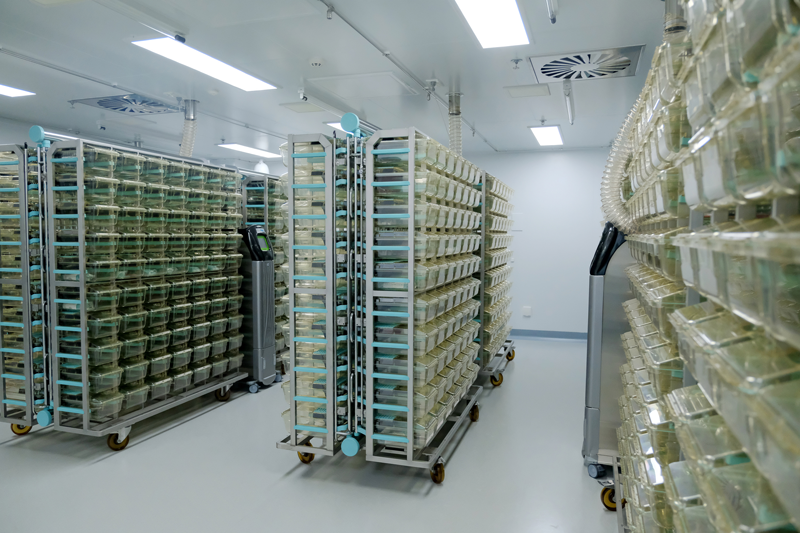
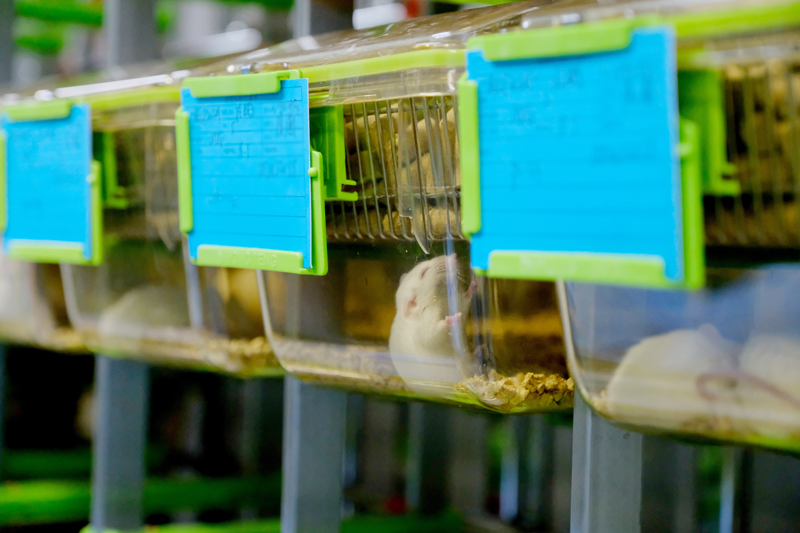
In August 2022, the laboratory animal facility of Shenzhen Bay Laboratory (SZBL) was officially put into use. The facility has a barrier area of 1500 m2 and can accommodate 2000 cages of SPF level laboratory rats and 12000 cages of laboratory mice that meet the requirements of national standards. The facility can provide standardized scientific research services such as animal breeding, animal experiments and animal disease model preparation for the life sciences and biomedical research of SZBL and related enterprises and institutions around.
The construction of the SZBL Laboratory Animal Platform began in April 2021 and passed the environmental testing of laboratory animal facilities organized by Guangdong Province on March 10, 2022.
On July 15, 2022, the laboratory animal review expert group led by Zhu Caiyi, Director of the Guangdong Laboratory Animals Monitoring Institute, conducted an on-site review of the Laboratory Animal Use License (New Application) of Shenzhen Bay Laboratory and the Laboratory successfully passed the review. Tu Huan, Vice Director of SZBL, Zheng Bo, SZBL Chief Core Facilities Officer, and all staff of the Laboratory Animal Platform participated in the review. On July 22, 2022, Shenzhen Bay Laboratory obtained the license for the use of laboratory animals.
Since the full launch of the laboratory animal facility in August, it has provided trainings for nearly 300 people. At present, 14 research groups have carried out experiments in the laboratory animal facility.
Brief introduction of the Laboratory Animal Platform of Shenzhen Bay Laboratory
The SZBL Laboratory Animal Platform provides scientific research services such as standardized laboratory animal feeding, animal experiments and animal disease model preparation for relevant disciplines such as life sciences and biopharmaceutical researches in Shenzhen Bay Laboratory and Guangdong-Hong Kong-Macao Greater Bay Area as well. The facility can accommodate 2000 SPF laboratory rats and 12000 laboratory mice that meet the requirements of national standards.
The main work of the SZBL Laboratory Animal Platform includes the following parts:
Basic Services:The basic services of the Platform is to provide scientific researchers with laboratory animals that meet the requirements of national standards, as well as environmental facilities for animal breeding and experiments.
Quality Control:The platform adopts irregular sampling and regular detection of sentinel rats to realize rapid detection of pathogenic microorganisms in laboratory animals. In combination with embryo transfer and IVF technology, it completes seed source purification to ensure the quality of laboratory animals.
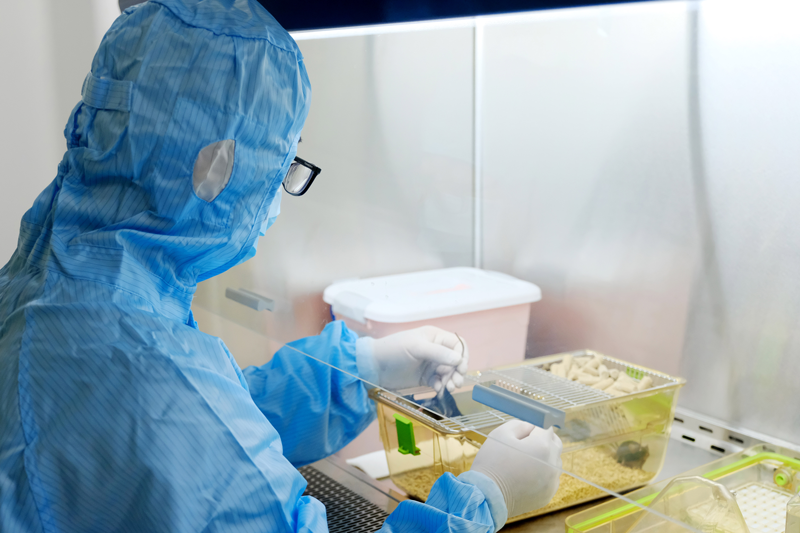
Animal experiments:Besides providing scientific researchers with routine laboratory animal operations, pathological sections and analysis, the Laboratory Animal Platform also focus on tumor, nervous system disease, cardiovascular and metabolic disease model construction and related animal experiments. It is planned to configure a small animal living imaging system, an X-ray irradiator, a micromanipulation system, a brain stereotaxic apparatus, a behavioral detection system for small animals' learning and memory functions and motor abilities, etc., which can complete animal model construction, phenotypic analysis, and help researchers solve problems in animal experiments.