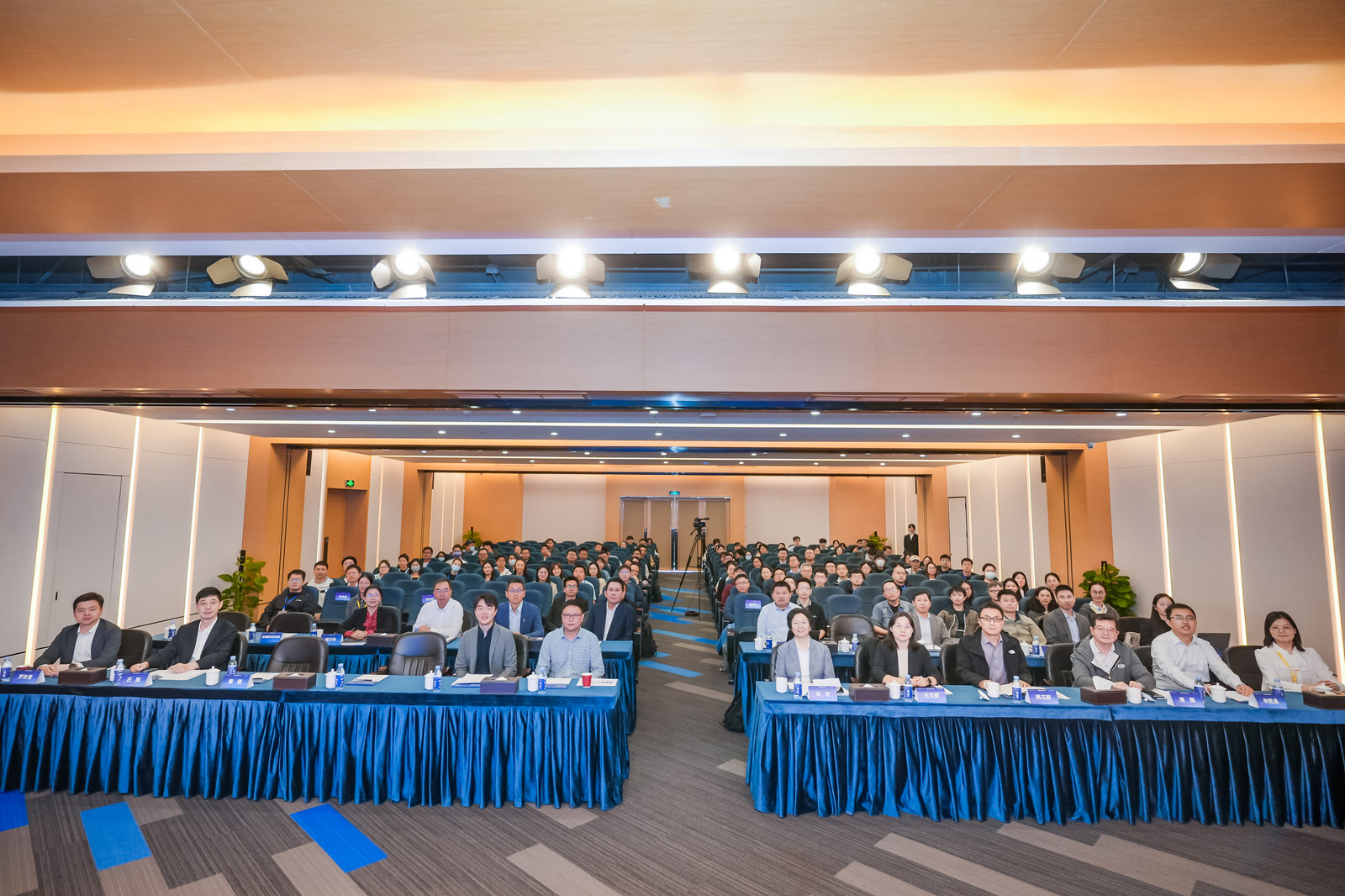
On December 4, 2025, the Greater Bay Area Life Science Imaging Technology Forum officially commenced in Guangming District, Shenzhen. As a key parallel forum of the Guangming Science City Forum, this event centered on the theme “Pooling Intelligence in the Bay Area, Empowering with Imaging.” Co-hosted by Shenzhen Bay Laboratory (SZBL) and Shenzhen Medical Academy of Research and Translation (SMART), it aimed to advance breakthroughs in imaging technology and industrial upgrading, injecting robust momentum into technological innovation across the Greater Bay Area.
Charting a “Bay Area Model” for Deep Integration of Innovation and Industrial Chains
Aligned with national strategic priorities and rooted in the Greater Bay Area, this forum strengthens Guangming Science City's capacity for resource aggregation and open collaboration in imaging. It aims to establish a “Bay Area Model” for deep integration of innovation and industrial chains. Aligned with national science and technology development strategies and Shenzhen's “20+8” industrial cluster development plan, the forum gathered industry leaders and top talent. Through keynote presentations and roundtable discussions, it addressed cutting-edge technical challenges and industrial demands in super-resolution imaging, AI image analysis, and novel fluorescent probes. This facilitated in-depth exchanges among industry, academia, and research sectors, jointly advancing the integrated development of academic research and industrial practice in life science imaging.
Yuyang Jiang, Vice Chairperson of the Shenzhen Municipal People's Congress Standing Committee and Chairperson of Shenzhen Association for Science and Technology, emphasized in the opening address that the global life sciences sector is undergoing a new technological revolution. Life science imaging technologies are advancing toward higher resolution, greater throughput, and enhanced precision, presenting both opportunities for leapfrog development and new challenges. Shenzhen will consistently safeguard technological innovation through legislation, actively advance biomedical field legislation, and foster mutual promotion between technological innovation and legal development to provide institutional guarantees for cutting-edge biomedical R&D and applications. The Municipal Association for Science and Technology will continue building platforms and optimizing services, adopting a more open stance and stronger measures to facilitate the “grounding” of scientific achievements, jointly contributing Shenzhen's wisdom and strength to building a “Healthy China.”
Huan Tu, Vice President of SMART and Vice Director of SZBL, stated that both institutions have continuously attracted high-end talent, built collaborative innovation platforms, driven scientific breakthroughs, and cultivated industrial ecosystems. They have gradually formed a hub for talent and innovation in the life sciences field, focusing on creating a comprehensive, one-stop public service platform that provides full-process support from sample preparation to intelligent analysis.
These technological platforms not only facilitate team aggregation and scientific research but also drive industrial development through close market interaction, becoming a signature feature of Guangming Science City. Over the years, the laboratory has continuously enhanced its technical capabilities by hosting specialized seminars on microscopy imaging, technical workshops, and online forums. It actively encourages scientists and engineers to explore the full potential of equipment and develop new methodologies and technologies. Additionally, it provides parallel validation services for instruments to domestic enterprises, accelerating the rapid iteration of domestically produced instruments. To date, over ten independently developed core components and complete systems have advanced to market integration. Through this parallel forum, we aim to collaborate with all sectors to lead in breakthroughs of key technologies, standard definition, and industrial guidance. We strive to contribute a “Chinese solution” to unraveling life's mysteries, allowing the wisdom of the Bay Area to shine brighter on China's journey toward scientific and technological self-reliance and strength.
Building an Integrated Platform for “Application-Validation-Development-Improvement”
Marking a significant milestone in SMART's public technology platform development, its Bio-Tech Center became one of the first “Joint Laboratories of the Scientific Instrument Equipment Verification and Evaluation Center” under the China Instrument and Control Society in October 2025.
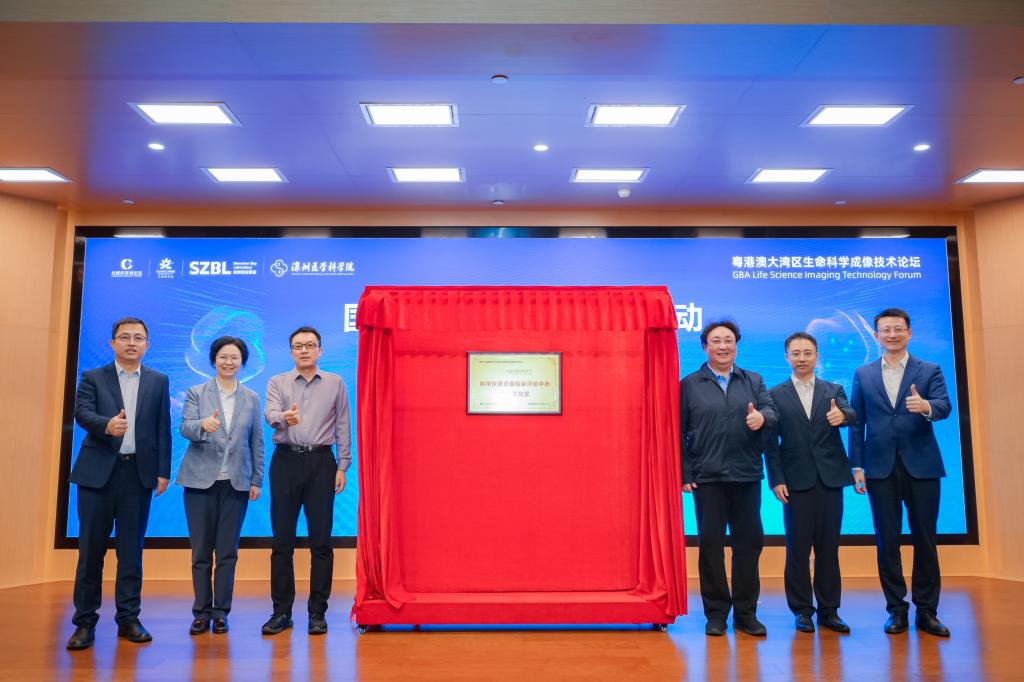
At this forum, multiple leaders and experts jointly launched the Domestic Instrument Verification and Evaluation Center of SMART and SZBL, unveiling the joint laboratory. Simultaneously, SMART and SZBL issued a call to scientific instrument manufacturers and sister institutions to collaborate on instrument validation and evaluation, standard development, and talent cultivation.
Yugang Han, Deputy Director of the Scientific Instrumentation Committee of the China Instrument and Control Society, stated at the forum that scientific instruments represent a nation's and a people's capacity to understand the world and nature. Developing the scientific instrument industry requires coordinated advancement across government, industry, academia, research, and application. As a pivotal platform established to advance the domestic scientific instrument verification and evaluation system, the Joint Laboratory of the Scientific Instrument Equipment Verification and Evaluation Center has consolidated the innovative strengths of 51 universities, research institutions, and testing centers nationwide. It is dedicated to building a comprehensive platform integrating “application, verification and evaluation, development, and improvement,” aiming to accelerate the iteration and upgrading of domestic instruments while enhancing their performance metrics, reliability, and stability.
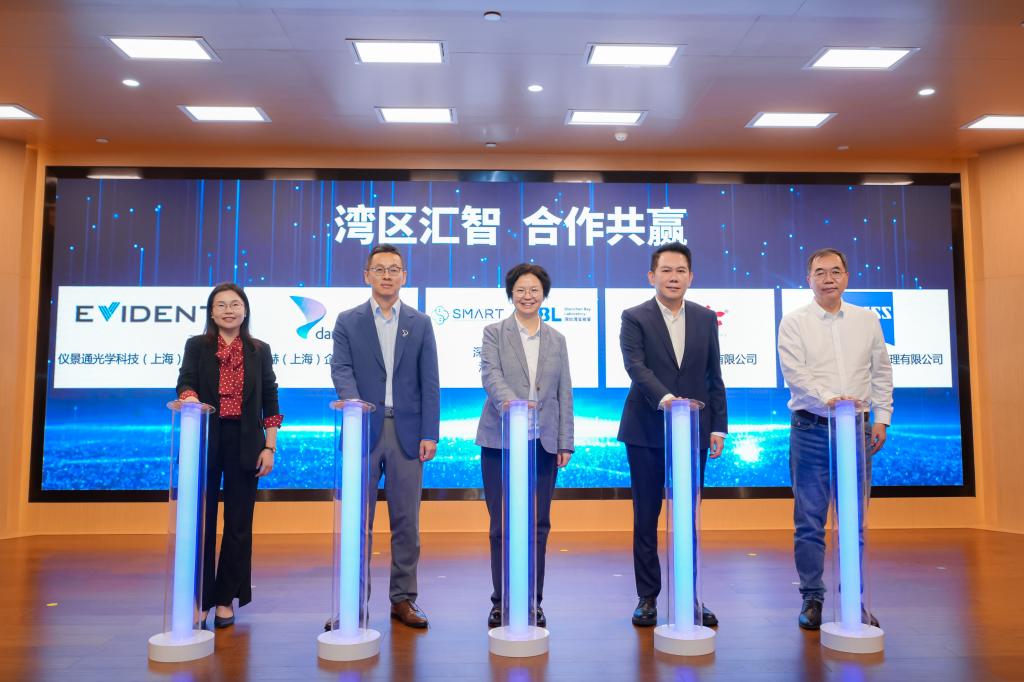
The forum also featured a series of cooperation signing ceremonies. By forming strategic alliances with leading domestic and international enterprises, the initiative will achieve strategic coupling between world-class instrument R&D capabilities and scientific platform innovation, establishing an efficient collaborative mechanism to foster bidirectional synergy between research and industry.
Statistics indicate that Guangming District's high-end medical device output value has surpassed 50 billion yuan, with over 2,300 medical device registrations. The district hosts representative enterprises such as Shenzhen Mindray Bio-Medical Electronics Co., Ltd., Shenzhen Comen Medical Instruments Co., Ltd., SINO IMAGING, Sonoscape Medical Corp. etc.. The biopharmaceutical industry has reached nearly 10 billion yuan in scale, with 39 industrial enterprises above designated size.
Cutting-Edge Insights Set the Industry's Technological Compass
The forum featured multiple keynote presentations and roundtable discussions, where renowned domestic experts and distinguished enterprise representatives shared the latest technological advancements and in-depth insights.
Experts from universities, research institutions, and industry associations offered strategic perspectives on the theme “Advancing to Next-Generation Optical Imaging: AI Empowerment, Technological Convergence, and Industrial Innovation.” Core topics included: technical bottlenecks and breakthrough paths for next-generation optical imaging; AI's transformation of the entire biomedical imaging workflow; industrialization opportunities and challenges for high-end microscopy; breakthrough strategies for domestically produced scientific instruments; and cross-disciplinary collaborations in optical microscopy.
Instrument Showcase Demonstrates Shenzhen's Cutting-Edge Manufacturing Capabilities
This forum showcased a range of newly developed imaging equipment achievements, including super-resolution imaging, AI image analysis, and novel fluorescent probes. Among them, the multidimensional single-molecule dynamic imaging microscope achieves nanometer-level precision in locating the three-dimensional position of individual fluorescent molecules, refreshing data millions of times per second to accurately record molecular motion details. It has reached internationally leading levels and is advancing toward industrialization. The mobile wearable brain PET scanner breaks the rigid requirement of traditional brain imaging that subjects “must lie still.” It achieves real-time brain functional imaging of humans during activities, tasks, and in natural environments for the first time, expanding new scenarios such as dynamic brain function monitoring. These instruments fully demonstrate Guangming Science City's innovative vitality and translational capabilities in life science imaging technology. They also showcase the unwavering commitment of national strategic scientific institutions like SZBL: scientific research must not only provide technological support or yield internationally influential basic research outcomes, but must also root itself in practical needs, resolutely advancing the independent control of key technologies.
The progressive deployment of these instruments signifies Shenzhen's breakthroughs in domesticating high-end equipment, marking a significant stride toward achieving “Made in China” for advanced instruments in the nation's biopharmaceutical industry.