Recently, the “Frontiers and Challenges in Early Diagnosis and Treatment of Alzheimer's Disease Symposium,” hosted by the Institute of Neurological and Psychiatric Disorders at Shenzhen Bay Laboratory, was successfully convened in Shenzhen. Alzheimer's Disease (AD) is a neurodegenerative disorder that severely threatens the health of the elderly. Early detection and intervention are crucial for slowing disease progression and improving patients' quality of life. Currently, global efforts to prevent and treat AD still face challenges such as insufficient sensitivity of early diagnostic technologies, limited effective therapeutic options, and poor integration between basic research and clinical translation. Among these, the apolipoprotein E4 gene (APOE4)—the primary genetic risk factor for sporadic AD—has become a core breakthrough area for mechanism research and targeted strategy development.
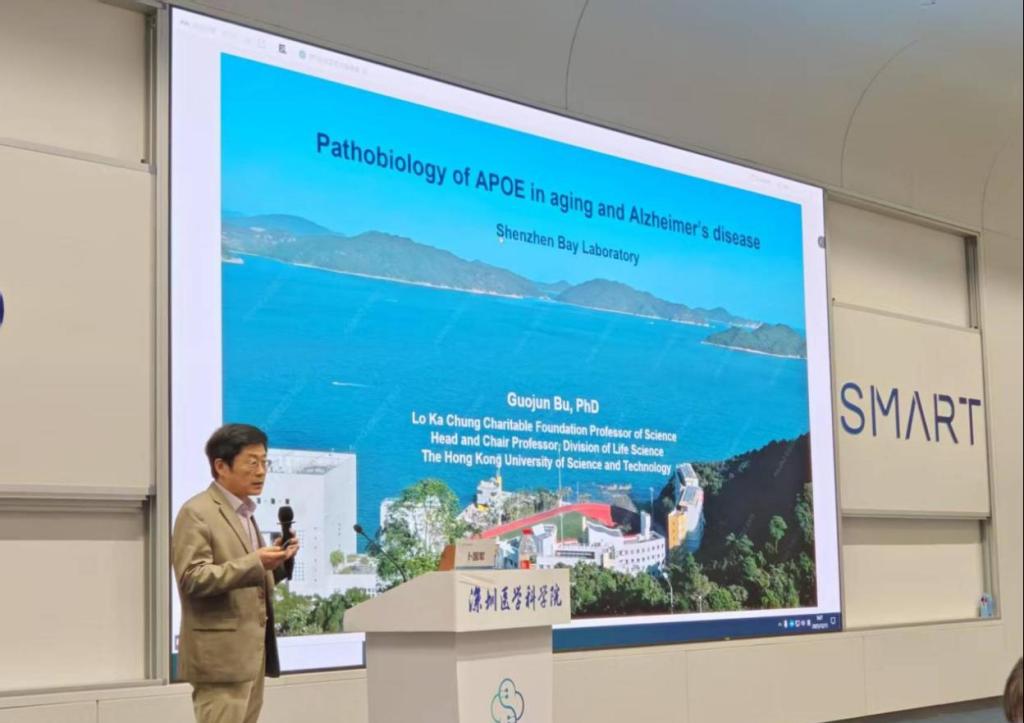
This conference focused on key scientific issues in the early diagnosis and treatment of AD, facilitating in-depth exchanges and discussions on cutting-edge directions including non-invasive early diagnosis technologies, disease-modifying therapies, APOE4 risk gene mechanisms, multimodal data integration, and translational medicine. Professor Guojun Bu, an internationally influential figure in this field, was specially invited to deliver a keynote presentation. Experts, scholars, and young researchers from across the nation gathered to explore innovative pathways for precision prevention and treatment of AD, accelerating the translation of research findings into clinical practice.
With three decades of dedicated research in this field, Professor Bu systematically elucidated the key mechanisms by which APOE4 drives AD progression through multiple pathophysiological processes, including lipid metabolism, Aβ deposition, neuroinflammation, and synaptic function. His insights provide crucial theoretical foundations for targeted interventions.
The conference specially invited Professor Xiaochun Chen from Fujian Medical University and Professor Jiawei Xin from the Union Hospital Affiliated to Fujian Medical University to serve as moderators and commentators. During the session, multiple scholars shared their teams' latest findings on cutting-edge explorations into the pathogenic mechanisms of APOE4 and the potential new therapeutic targets and strategies derived from these discoveries. These contributions provide crucial scientific foundations for developing precision prevention and early treatment approaches for high-risk populations.
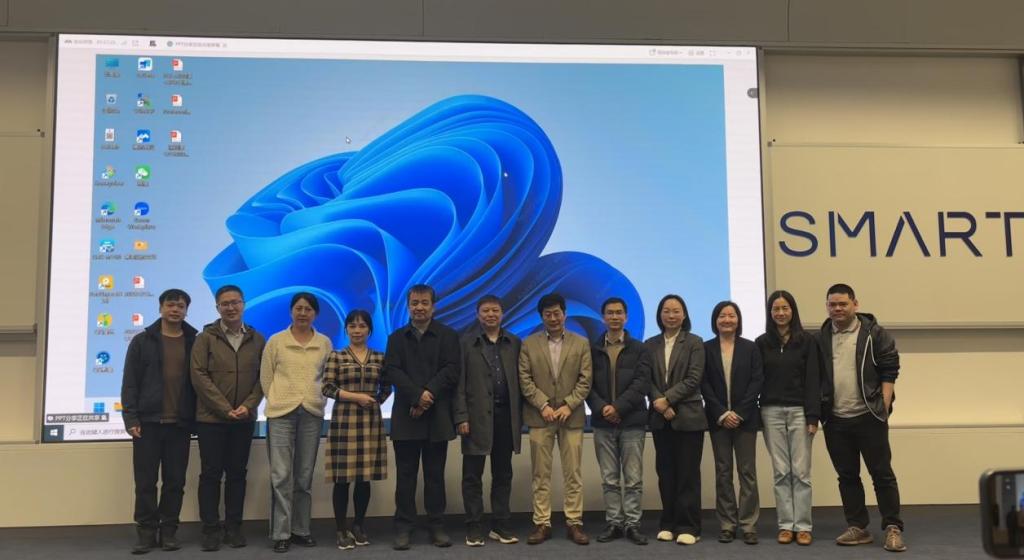
Experts unanimously agreed that interdisciplinary integration is crucial for accelerating breakthroughs in AD research. Enhanced collaboration among neuroscience, bioinformatics, medical engineering, and clinical medicine is essential to establish a long-term mechanism for deep integration between clinical practice and scientific research, thereby advancing the innovation and implementation of AD prevention and treatment technologies at Shenzhen Bay Laboratory. Participants noted that this symposium consolidated domain expertise, focused on critical bottlenecks in early AD diagnosis and treatment, and explored feasible pathways for breakthroughs. Moving forward, the institute will continue building open collaborative platforms to advance basic research toward clinical translation, contributing to global efforts in AD prevention and treatment.