On 27 January 2026, the launch and implementation plan review meeting for the National Key R&D Programme's Synthetic Biology initiative, titled‘Artificial Design and Construction of Mammalian Cell Protein Secretion Systems’, was solemnly convened at Shenzhen Bay Laboratory. Led by Shenzhen Bay Laboratory in collaboration with prestigious institutions including Tsinghua University, Southern University of Science and Technology, Huazhong Agricultural University, and the Shenzhen Institute of the Hong Kong University of Science and Technology, this initiative brings together expertise across synthetic biology, cell biology, artificial intelligence, and nanomedicine. It aims to systematically decipher and reengineer mammalian protein secretion pathways, overcoming critical technological bottlenecks in high-end protein drug production to provide foundational support for China's bio-manufacturing and precision medicine sectors.
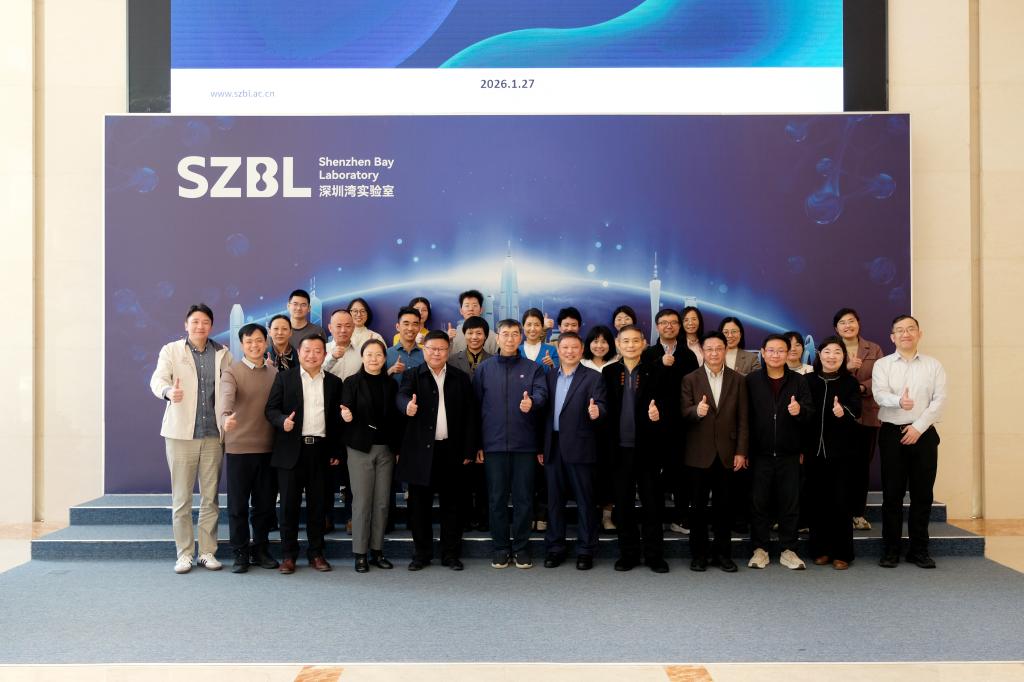
The launch meeting was chaired by XiaojunHu, Secretary of the Party Committee of Shenzhen Bay Laboratory. Attending to provide guidance were the project's principal experts: Academician YingjinYuanof the Chinese Academy of Sciences and Professor at Tianjin University; Professor HanmeiXuof China Pharmaceutical University; alongside advisory experts from relevant institutions including Xian'enZhang, XinhuiXing, ChaoZhong, JiahaiZhou, XiaoweiChen, YuCao, and MinghuaLiu. Attendees included Shenzhen Bay Laboratory management representatives ChaoLi, ZhiWang, XiaoyuTang, and JiefengChen; Chief Scientist YanzhuangWang; project leaders ChaoWangand XiaoyanZhang; alongside over thirty core team members.
Mammalian cells serve as the core‘cellular factories’for producing high-end protein therapeutics such as antibodies, enzymes, and hormones. However, their complex secretory systems and poorly understood regulatory mechanisms have long constrained industrial development, leading to issues such as low yields and unstable quality. This project addresses critical national strategic needs in synthetic biology and biomanufacturing. It focuses on the entire process chain—from endoplasmic reticulum folding and Golgi processing to non-classical secretion—integrating artificial intelligence prediction, modular design, and engineered construction methods. The aim is to systematically decipher the regulatory mechanisms of secretory pathways, achieve functional remodelling and optimisation, and ultimately establish a new generation of highly efficient, controllable, and adaptable protein production chassis cells for diverse products.
The project comprises three closely integrated sub-projects, forming a complete research cycle of‘analysis-design-construction-testing-iteration’. Sub-project One prioritises establishing an AI-driven design platform for secretion pathways, enabling systematic analysis and precise prediction of endoplasmic reticulum protein folding and quality control mechanisms. Sub-project Two concentrates on classical secretion pathways, undertaking modular reconstruction and functional optimisation of key organelles such as the Golgi apparatus; Sub-project Three focuses on deciphering non-classical secretion mechanisms in pathological processes including metabolic disorders and neurodegenerative diseases, while developing nanovesicle-targeted intervention strategies. These three sub-projects complement one another, collectively advancing the rational design and functional enhancement of the secretion system.
During the project review meeting, the principal investigators systematically presented the overall objectives, technical approach, research foundation, and recent progress. Following thorough questioning and discussion, the expert panel concluded that the project is grounded in scientific frontiers, possesses clear objectives, focused content, and a feasible implementation plan. The research team exhibits a well-structured composition with distinct interdisciplinary characteristics, backed by solid research foundations and robust collaborative capabilities. The implementation plan and organisational management mechanisms are comprehensive, with adequate supporting conditions. The panel unanimously approved the project's commencement, recommending enhanced data sharing and experimental coordination between sub-projects during implementation. They emphasised proactive intellectual property planning and industrialisation pathways, aiming for internationally influential breakthroughs in secretion system design principles, core tool platforms, and translational applications.
This project represents a significant national scientific undertaking spearheaded by Shenzhen Bay Laboratory, fully demonstrating the laboratory's strategic positioning in synthetic biology frontiers and its capability to undertake major national scientific challenges. The project's successful implementation is anticipated to yield systematic breakthroughs in fundamental theories of protein secretion, AI-assisted biological design, novel cellular factory construction, and targeted delivery technologies. This will not only propel the advancement of synthetic biology as a discipline but also provide crucial support for China's biopharmaceutical industry to overcome reliance on key technologies and achieve self-reliance and control.